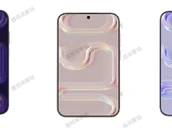
Finally coming? Samsung working on first smartphone with rollable screen
This design would mark the return of the slider
While others are just now releasing their first foldables, Samsung has been selling them for seven years. Apparently, that is starting to get boring, so Samsung is looking for the next big thing. The answer may be the world’s first smartphone with a rollable screen.
LG Almost Made It; Samsung Is Trying Again
Samsung is certainly not the first manufacturer to explore the idea of smartphones with rollable screens. Earlier this year, several videos surfaced featuring an LG prototype. The story is well-known: LG withdrew from the smartphone market, which meant this LG Rollable never made it to market.
Foldables solve the problem of fitting a large screen into a compact body. Rollables—for lack of a better word—do so in a completely unique way. Not with a hinge that you have to open and close yourself, but with mechanical gears that physically expand the body. The screen then stretches along with it automatically. Cool? Yes! Fragile? Undoubtedly.
Screen expands from 16:9 to 21:9
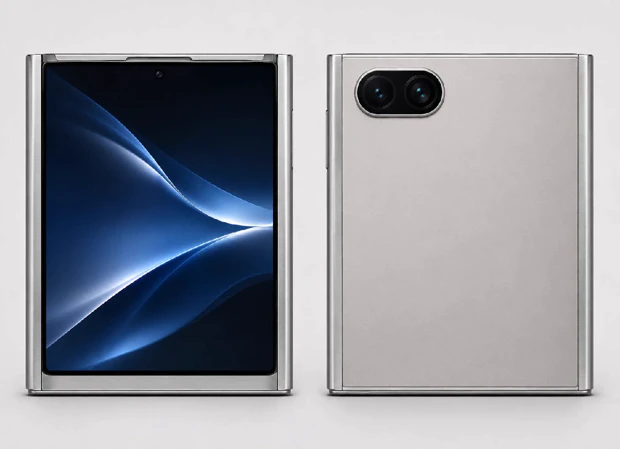
The rumor that Samsung has now found a way to create a production-ready rollable smartphone comes from Ice Universe, who claims that the device has an aspect ratio that can expand from 16:9 to 21:9. The screen presumably won’t get wider but taller. In other words, the sliding mechanism is vertical rather than horizontal.
When retracted, the screen has the aspect ratio of phones from ten years ago: wider and shorter than what we’re used to today. When extended, you gain about 30 percent more screen real estate. That’s great for long texts, because on a wide screen, longer simply means more lines. For video, it’s a different story: movies fill the 21:9 aspect ratio nicely, but on YouTube and TV shows, you’ll see black bars. Sony focused on 21:9 for years but moved away from it with the Xperia 1 VI. So the question is whether a third more screen space is worth a fragile sliding mechanism, especially now that a Galaxy Z Fold roughly doubles the screen size.

The sliding mechanism is the weak point
Ice Universe himself cites the battery as the biggest challenge, because there’s little space left around the sliding mechanism. With silicon-carbon (Si-C) batteries, which can store more capacity in the same space, that seems like the least of our problems. The mechanism itself is not, and the video of the LG prototype showed why: it all looks incredibly fragile and plastic. Moreover, a sliding mechanism can be forced open or tampered with. And then there are the issues of dust resistance and wear and tear.
Name and release date still unknown
The device’s name is not yet known. Samsung registered the name Galaxy Z Roll with the European Union Intellectual Property Office (EUIPO) back in 2021, and a Korean report previously mentioned the name Galaxy Z Slide, but it could also end up being something completely different. The same applies to the timing: Ice Universe doesn’t mention a specific year, while that same Korean report anticipates the first half of 2028 and Android Headlines even mentions 2027. As long as the sources contradict each other, we don’t dare to give a specific date. And that long wait also has a downside: Samsung might change its mind in the meantime.
So there’s no point in waiting for now. And fortunately, you don’t have to. Because if you’re already looking for a large screen in a compact design, you can check out the Galaxy Z Fold 8 or the Galaxy Z Flip 8.
Source: X/@IceUniverse