Compare the Best Camera Phones
Camera phones have replaced standalone cameras for many people, and as a result, the camera is often the reason for choosing a particular device. This overview lists the devices with the best cameras, and below you can read about what to look for when choosing a good camera phone. We don’t earn more from one brand or device than another, so the order doesn’t reflect our preference. Use the filters to narrow down the list to what you’re looking for.
The most popular camera phones
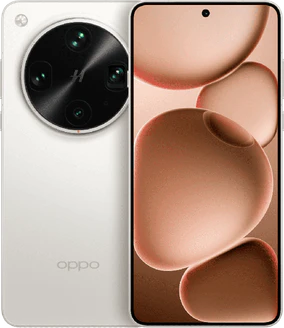
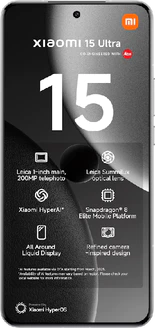
- Unparalleled cameras
- Very powerful performance
- Amazing display
- Numerous AI features
- 4 promised Android updates is less than other flagships
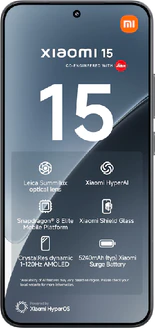
- Compact powerhouse
- Excellent display
- Very good battery life
- Enhanced HyperOS+updates
- European version has smaller battery than China

- Very nice design
- Premium display
- Excellent cameras
- Lightning-fast performance
- Pricey for an Honor phone
All camera phones


What should you look for in a camera phone?
Start with what you’ll be photographing. If you mainly take pictures of kids and pets indoors, you’ll need something different than if you want to zoom in on vacation or film a concert in the dark. Next, look at the three things that really determine the image quality: how much light the sensor captures, what lenses it has, and what the software does with the result.
How do camera phones really differ?
The models listed above differ in these areas.
- Sensor size: a larger sensor captures more light, and you’ll notice this most at dusk and indoors; though it does result in a bulkier camera module.
- Telephoto lens: only a true telephoto lens—whether periscopic or not—provides detail when zooming in; without such a lens, the device crops out of the frame.
- Image stabilization: this determines whether a photo remains sharp in low light and whether video stays steady. There’s a big difference between devices in this regard.
- Selfie camera: the front-facing camera gets much less attention than the rear camera, even though many people use it most often.
- Image processing: two devices with the same sensor produce different photos, because brands make different choices regarding color, contrast, and noise reduction.
In daylight, all of these devices take photos that are more than adequate. So the choice comes down to challenging conditions: low light, high contrast, motion, and distance.
Choose based on sensor size if you mainly take photos indoors and in low light.
Choose based on telephoto lens if you want to capture subjects from a distance while on vacation or at sporting events.
Choose based on video capabilities if you’re filming instead of taking photos; that’s a separate consideration and not part of the same ranking.
Check out the mid-range segment if you mainly take photos in daylight: that’s where the differences are smallest. See the mid-range smartphones.
What do you get with a more expensive camera?
Less than the ads suggest, and more than you’d think once the light fades. In daylight, the difference between mid-range and top-tier models has largely disappeared: a mid-range smartphone takes photos outdoors where you won’t miss a thing. The premium price of high-end models comes down to three things: a larger sensor, a true telephoto lens, and the ability to maintain sharpness in low light and when capturing moving subjects. If you mainly take photos outdoors and on vacation in good weather, you’re paying for quality in high-end models that you won’t actually use.
There’s also a limit to what a phone can do. Zooming in far, capturing moving subjects in the dark, and achieving true depth of field remain the domain of a camera with a large sensor and interchangeable lenses. Anyone serious about photography will get better results with a standalone camera than with the most expensive device in this overview.
Why Megapixels Mean Little
Megapixels mean little because you almost never get them. Modern sensors combine groups of four or nine photodiodes into a single image pixel—a process called pixel binning—so a device with a 50- or 200-megapixel sensor typically produces a photo of around 12 megapixels. This isn’t a cost-saving measure but a deliberate choice: combining pixels reduces noise, and that’s more important than detail you’ll never see on a phone screen. Google does this explicitly on the Pixel, where a sensor with dozens of megapixels produces a 12-megapixel photo by default in the camera app.
So the number on the box is mainly a marketing ploy. What determines quality is how much light the sensor captures as a whole, and what the image processing does with it.
Zoom: optical, periscopic, or digital
Only a lens delivers true detail. A telephoto lens truly brings distant subjects closer without inventing detail. The downside is that such a lens usually has a smaller sensor and a smaller aperture, causing it to perform worse in low light than the main camera. A periscope lens fits into a thin housing because a prism deflects the light by a quarter turn. Digital zoom, on the other hand, crops the image and fills in the rest with software. This has improved significantly in recent years, but detail that isn’t there optically cannot be added. So pay attention to the number of lenses and their range, not the highest zoom factor advertised.
How reliable is a camera score?
A camera score is useful as a guide, but not as a final verdict. The best-known score is from DXOMARK, which tests phone cameras in a fixed laboratory setup and assigns subscores for photos and video. This yields comparable measurements, but there are three things to keep in mind.
- The weighting is not public: DXOMARK considers the conversion of subscores to the final score to be confidential, so it’s impossible to calculate exactly why a device ends up with a score two points higher.
- The company profits from the industry it evaluates: it sells testing equipment, reports, and calibration advice to manufacturers. DXOMARK states that scores are not for sale and that it also tests devices from brands that are not clients, but the dual role of tester and consultant remains an issue that the trade press rightly highlights.
- Scores are not comparable across years: the testing method has been expanded several times, and old results are recalculated accordingly. Moreover, the scale has never stopped at 100: top models are now far above that mark, making a fixed threshold meaningless.
Therefore, compare a score with other benchmarks. The Consumentenbond purchases devices itself and assigns separate scores for photos, selfies, and video. The VCX Forum publishes its methodology and weighting publicly, with the caveat that manufacturers are members. And blind comparisons, in which people select photos without knowing the brand name, often yield a different winner than a lab score, because they measure preference rather than a metric.
What AI Does to Your Photos
AI-powered image processing is increasingly becoming the key factor in choosing a camera phone. The image processing in a phone not only enhances what’s there but also fills in what’s missing. In 2023, a test at Samsung set the benchmark: a Reddit user intentionally blurred a photo of the moon, displayed it on a screen, and photographed it with a Galaxy, after which the device produced lunar details that weren’t present in the original image. Samsung denied that any image had been superimposed, but did describe a deep-learning-based detail enhancement. This confirms that a phone adds details that were not originally captured.
The industry is now labeling this itself. In its recent Pixel models, Google adds provenance data to every photo taken with the camera app in accordance with the C2PA standard, and Samsung supports those same Content Credentials for AI-processed images. Regulatory requirements are also coming into play: the transparency obligations of the European AI Regulation require that AI-generated or manipulated output be marked in a machine-readable format. Practical implications for your choice: don’t just look at how beautiful a photo is, but also at how much the device itself generates, and whether that’s visible.
The jargon at a glance
If you want to take photos manually, you’ll encounter three settings that together determine the exposure.
- ISO: the light sensitivity. A higher setting lets in more light but produces more noise, so a high maximum ISO value isn’t necessarily a sign of quality.
- Shutter speed: how long the sensor receives light. A short shutter speed freezes motion; a long one captures more light but requires a steady phone or a tripod.
- Aperture: the opening of the lens, expressed as an f-number. A lower number means a larger opening, so more light and a blurrier background.
The automatic mode handles all of this on its own, and does it well; manual mode is especially useful when shooting against the light, in a dark room, or when taking a long exposure of the starry sky.
How the camera phone replaced the standalone camera
The first commercial camera phone was the Kyocera Visual Phone VP-210 from 1999, which featured a front-facing camera intended for video calls. The Sharp J-SH04, released in November 2000, was the first mass-market model, featuring a rear-facing camera and the ability to send images over the cellular network. That last feature was the breakthrough, and Philippe Kahn had already demonstrated why in June 1997: while in the hospital, he connected a digital camera, a laptop, and a cell phone and sent a photo of his newborn daughter directly to family and friends. It wasn’t the first photo taken with a phone, but it was the first to be shared instantly. In 2008, Nokia sold more cameras than any other camera manufacturer.
One device from that era deserves a special mention, because it settled the megapixel debate mentioned above as early as 2012: the Nokia 808 PureView had 41 megapixels, but its entire philosophy revolved around combining pixels into a single, higher-quality pixel. That’s exactly what’s known today as pixel binning, and the rest of the market adopted it years later.
