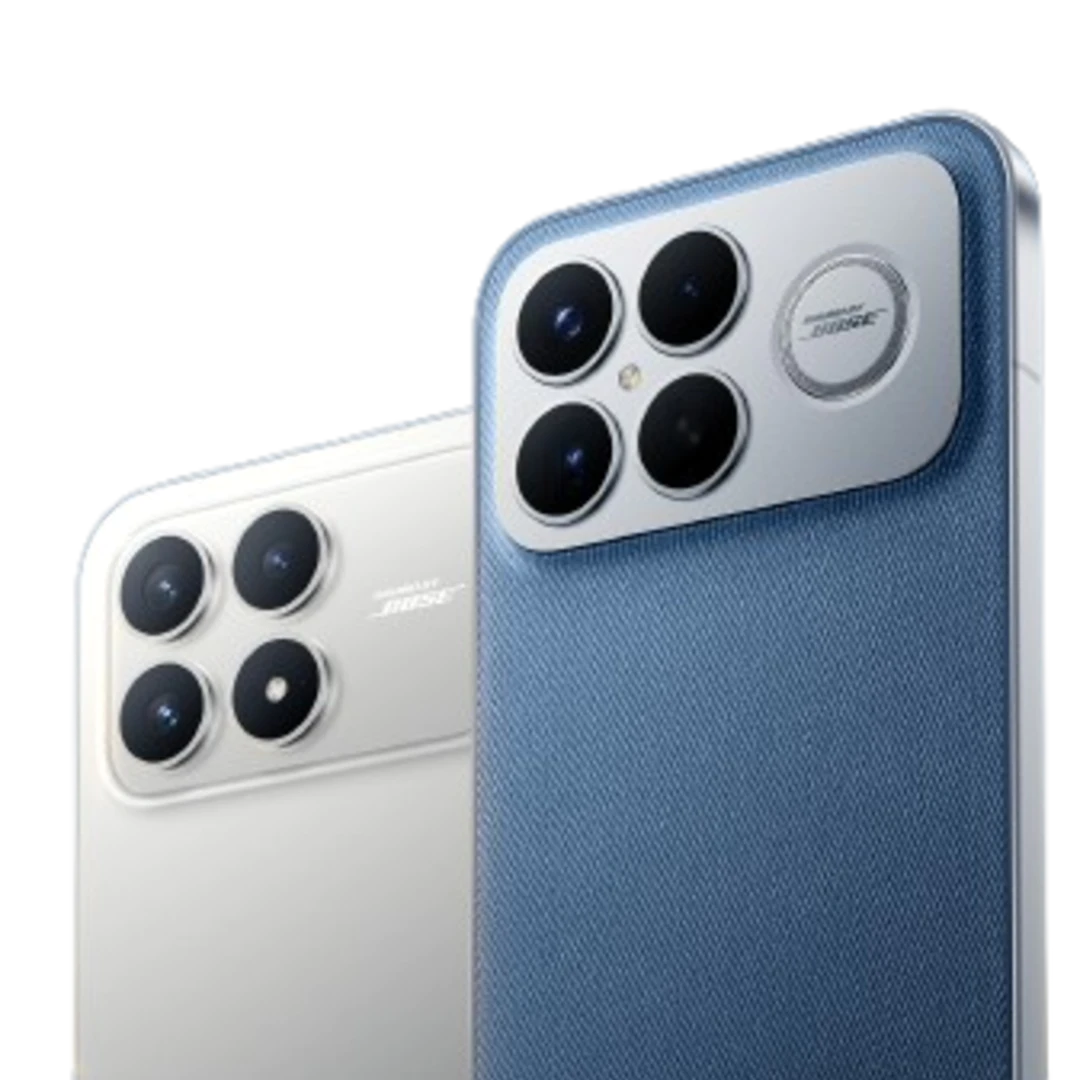
Compare the POCO F8 Series
The POCO F8 series is the flagship series from POCO, Xiaomi's smartphone brand: top-of-the-line Qualcomm chips, a triple-lens camera system, and speakers tuned by Bose. This overview compares the POCO F8 models side by side, showing the current price at each participating retailer. We don’t earn more from one model than another. You can decide which model to choose on the model page itself: there you’ll find the storage options, colors, and the prices listed by participating retailers.
Which model from the POCO F8 series is right for you?
The series centers on the F8 Pro and the F8 Ultra, and the differences between them are greater than their names suggest. The Ultra features a newer generation of chips, a larger main sensor, a periscope lens, a 50-megapixel ultra-wide lens, wireless charging, and its own subwoofer. The Pro, on the other hand, offers a more compact device with a faster telephoto lens.
How do the POCO F8 models really differ?
- Chip generation: the F8 Ultra runs on the Snapdragon 8 Elite Gen 5, while the F8 Pro runs on the Snapdragon 8 Elite—so they don’t share the same chip in two variants
- Cameras: the Ultra has the larger main sensor with the faster lens, a periscope lens that reaches up to 115 mm, and a 50-megapixel ultrawide; the Pro reaches up to 60 mm but does so with a faster telephoto lens and has an 8-megapixel ultra-wide lens
- Wireless charging: is only listed in the Ultra’s specs, at 50W; both models support 100W wired charging
- Audio: both models have stereo speakers tuned by Bose, but only the Ultra also has its own subwoofer
- Size: the Pro has a 6.59-inch screen compared to 6.9 inches on the Ultra, which is noticeable when held in the hand and in a pants pocket
| Model | Display | Chip | Battery and Charging | Telephoto and Ultra-Wide | Price Range* |
|---|---|---|---|---|---|
| POCO F8 Pro | 6.59-inch AMOLED, up to 120 Hz | Snapdragon 8 Elite | 6210 mAh, 100W wired | 50MP, 60 mm, f/2.2; 8MP ultra-wide | €€ |
| POCO F8 Ultra | 6.9-inch AMOLED, up to 120 Hz | Snapdragon 8 Elite Gen 5 | 6500 mAh, 100W wired and 50W wireless | 50MP periscope, 115 mm, f/3.0; 50MP ultra-wide | €€€ |
*Relative price indication within the series: more € symbols mean it’s more expensive. See the overview above for current prices.
Batteries of this size last a full day with normal use. The difference in capacity between the two is small, and the Ultra also has a larger screen to power, so don’t expect a significant difference in battery life. A screen refresh rate of up to 120 Hz is noticeable when scrolling and in games; IP68 means protection against dust and brief immersion in fresh water, not against saltwater or chlorinated water. POCO lists the Ultra’s screen as 6.9 inches, with a footnote noting that the diagonal across the full rectangle is approximately 6.85 inches and the visible area is smaller due to the rounded corners.
You don’t have to base your choice on these points: both models feature an AMOLED display with a refresh rate of up to 120 Hz, a 50-megapixel main camera with image stabilization, IP68 rating, a battery capacity exceeding 6,000 mAh, 100W wired charging, and Dolby Atmos. Both run on HyperOS 3.
Choose the F8 Pro if you want a more compact device and can do without the periscope lens, the 50-megapixel ultrawide camera, and wireless charging
Choose the F8 Ultra if you want to zoom in far in good lighting, want a better ultra-wide lens, want wireless charging, or play demanding games for long periods and want to maintain stable performance
How noticeable is the difference between the chips?
In everyday use, not much; in demanding games and during prolonged use, more. Both chips are among Qualcomm’s top-tier offerings, so opening apps, switching between them, and taking photos are smooth on both. The difference between two generations of top-tier chips lies mainly in how long a device can maintain that speed as it heats up, and how much power it needs to do so. If you play for hours on end, be sure to check out gaming phones to compare this series with other devices.
More zoom range or more light?
That’s the real camera choice within this series, and there’s no one-size-fits-all winner. The Ultra’s periscope lens reaches up to 115 mm and brings a face in from a distance, but it has a narrower aperture, so it requires more light. The Pro’s telephoto lens doesn’t go beyond 60 mm—a few steps away—and is faster. On the other hand, the Pro’s telephoto lens lacks optical stabilization in its specs, while the Ultra’s periscope lens does have it, which negates some of that advantage in low light. The biggest visible difference lies elsewhere: the Ultra’s ultrawide camera is 50 megapixels, while the Pro’s is 8 megapixels, and you’ll notice that difference in landscapes and group photos.
How does Sound by Bose perform in practice?
Bose has tuned the speakers on both models. This applies to the built-in speakers, not to the headphones or earbuds you connect to them. If you mainly listen with earbuds, the brand won’t change your sound. Only the Ultra has its own subwoofer in addition to the stereo speakers, so if you regularly use your phone as a speaker for music or movies, go with the Ultra.
How long will a device from this series remain safe to use?
As long as it receives security updates. Xiaomi does not disclose how many years that is for each model. However, the legal minimum applies, since the series was launched in the EU after June 20, 2025: five more years of security updates after the last day of sale and seven years of parts availability. That’s a legal minimum, not a promise from the brand, so don’t count on a device in this class being supported for longer than that.
What about the previous F-generation?
As soon as a series gets a successor, the price of the predecessor usually drops, while the end date for updates remains the same. If price is your main concern, compare the F8 models with the older devices in the POCO F series. If you want to see how this series compares to the rest of the top tier, the devices are listed side by side with high-end smartphones. The brand’s entire lineup is listed under all POCO phones, and by series under the POCO X series, POCO M series, and POCO C series.
