Compare Rugged Phones
Rugged phones, also known as toughphones, are designed to keep working where a regular smartphone would quickly break down: on construction sites, in the fields, on the water, and in cold weather. Here, you’re not choosing a brand but a level of protection. We don’t earn more from one brand or device than another, so the order doesn’t reflect our preference. Use the filters to narrow down the list to what you need.
Samsung Xcover Phones

1 product
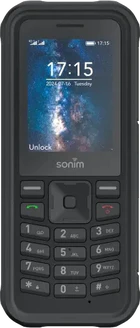
Sonim phones

1 product
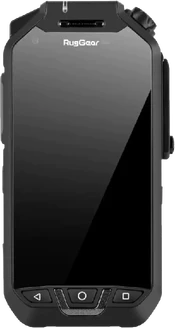
RugGear phones

All rugged phones


What should you look for in a rugged phone?
Start by asking yourself what breaks first in your line of work, and how often that actually happens. A phone that falls out of your hand onto concrete requires different protection than one that gets dirty and is hosed down after a shift. That answer determines how much protection you need—and how much you’re willing to compromise on other features.
How do rugged phones really differ?
The options listed above vary in these areas.
- Drop protection or water resistance: rugged devices are almost always water- and dust-resistant, but a water-resistant device is rarely rugged.
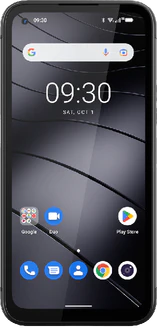
- Work phone or smartphone: a simple work phone has a smaller screen and therefore fewer parts that can break; a rugged smartphone has an app store.
- Battery and weight: extra materials and a larger battery make the device heavier, and you’ll feel that on your belt and in your arm after a shift.
- Controls: physical and programmable buttons work with gloves on and with wet fingers; a touchscreen icon does not.
There’s one thing you don’t need to compare: every model in this overview can withstand a bit of dust and a rain shower. The real choice begins above that level.
Protection doesn’t come for free here. For the same price, you get a less powerful processor, a smaller screen, and a lower-quality camera in this category than with a regular phone: you’re paying for the casing, the waterproofing, and the testing. That pays off if you’re in a place every day where a regular phone wouldn’t last. If you only need that protection twice a year, a sturdy case and a screen protector on a regular phone will serve you better—and you’ll keep the camera and processing speed you actually use the rest of the year.
Choose a rugged work phone if your main priority is staying reachable and having battery life left after your shift.
Choose a rugged smartphone if you also need to fill out forms, take photos, or navigate while on location.
Choose a standard waterproof phone if you mainly want a good screen, camera, and speed, and the device won’t be dropped on a hard surface.
Rugged or just waterproof?
Rugged and waterproof aren’t the same thing, even though they used to go hand in hand: anyone who wanted a water- and dust-resistant phone automatically ended up with a rugged case. Nowadays, manufacturers also seal slim devices without making the design bulkier. That’s more comfortable to use, but it doesn’t make the device more resistant to drops, and the screen is actually the first thing to break in a fall.
Incidentally, a device doesn’t have to look rugged to survive a fall. A sturdy metal frame and a screen that’s slightly recessed into the casing already make a big difference, and according to manufacturer Corning, its Gorilla Glass takes a step forward with every generation. It can still break, and even glass that doesn’t shatter can still get scratched. Rugged phones counter this by adding extra material around the edges, often rubber.
How do you know how much a device can withstand?
Read the label, not the slogan. MIL-STD-810 is a U.S. military testing standard, and the latest version is currently MIL-STD-810H from January 2019. Manufacturers like to use that designation, but there’s no authority that certifies it: the standard is a collection of test methods from which the manufacturer chooses which ones to perform and under what conditions. So two devices with the same letter may have passed very different tests.
Since June 20, 2025, there has been a standard in addition to this one that the manufacturer does not choose: the EU energy label. Smartphones introduced as new in the EU on or after that date carry such a label, which indicates not only energy consumption and battery life but also how well the device withstands drops, dust, and water, plus a repair rating from A to E. This allows you, for the first time, to compare two devices using the same standard. And because these regulations already require every new phone to be drop-resistant, the question on this page shifts: not whether a device will survive a drop, but how much more than the minimum you actually need. You can read exactly what the IP rating means under waterproof phones.
Which brands make rugged phones?
Rugged series are often recognizable by their names, and Samsung is the best-known example with its XCover devices. In addition, there are manufacturers that make nothing else, each focusing on a different type of work. Sonim targets construction, engineering, agriculture, and healthcare. RugGear focuses on emergency services, industry, and organizations with their own networks, emphasizing accessibility and push-to-talk functionality. Crosscall is a French manufacturer that focuses on outdoor sports and outdoor work. Cat, the line that Bullitt Group manufactured under license from Caterpillar, is no longer adding new models, and a brand that has ceased operations will not make any new commitments regarding updates or parts.
How long does a rugged phone remain usable?
Don’t assume that a device that lasts for years will also remain secure for years. A case that can withstand anything is of little value without software, and models in this category often remain on the market for a long time. The EU regulations effective as of June 20, 2025 set a minimum standard: updates must remain available for at least five years after a model is discontinued, parts for at least seven years, and the battery must retain at least 80 percent of its original capacity after 800 charging cycles. This is a legal minimum requirement, not a manufacturer’s promise, so check the brand’s specific commitments for each model.
In this category in particular, it’s worth checking the “repairability” rating on the energy label: a durable casing is of little value if a screen or battery cannot be replaced.
