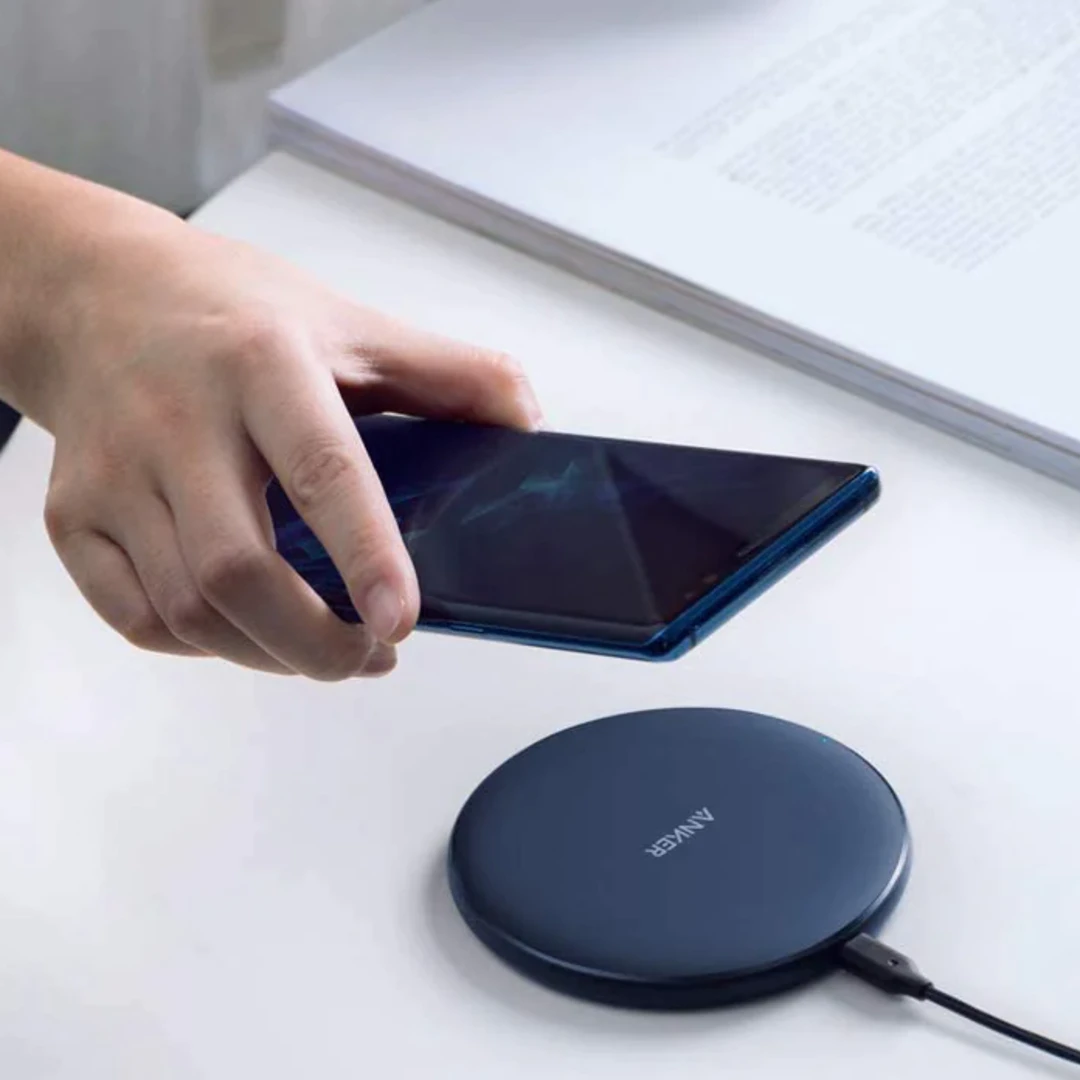
Wireless rechargeable phones
Need a phone that supports wireless charging? We've compiled a list of all the cell phones available in the Netherlands that support wireless charging. No more fumbling with cords in the dark when you're ready for bed.

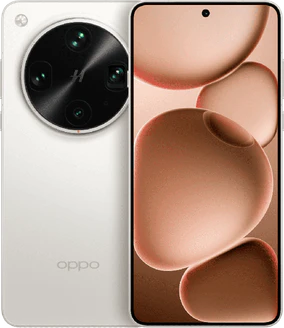
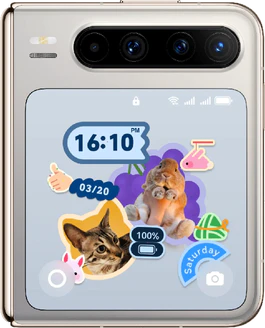
Wireless charging is a feature that allows you to charge your cell phone without plugging in any cables. However, the charger on which you place your phone must have a cable plugged into it. Below, you’ll find all the advantages and disadvantages of wireless charging, as well as some technologies and a brief history.
Advantages of Wireless Charging
The biggest advantage of wireless charging is that you no longer need to plug a cable into your phone to charge it. Instead, you simply place the device on the charger. This is especially handy in the dark when you don’t have a light to find the charging port. It also helps keep your phone looking good longer, since repeatedly plugging in the connector can damage your device. In theory, it might even be possible to create a completely port-free phone that’s impervious to dust, dirt, or water.
Disadvantages of Wireless Charging
Wireless charging also has its drawbacks. For one, wireless charging is slower than wired charging. Energy is also lost during the charging process, making it slightly less efficient and therefore more expensive to use. Some of these drawbacks have been largely addressed in recent years. For example, wireless fast chargers are now available, and thanks to newer technologies, energy loss has also been minimized. Another point that may be seen as a drawback is that the phone must be close to the wireless charger—ideally, they should be touching. This means it’s not possible to charge your phone from across the room.
Standards
Just like charging cables, there are also different standards for wireless chargers. For cell phones and other consumer electronics, there are currently two major ones:
- Qi
- PMA
The best known is Qi (pronounced “chee”). This technology was developed by the Wireless Power Consortium (WPC). Most phones that can be charged wirelessly support this standard, such as Apple and Samsung. The other standard is PMA, which stands for Power Matters Alliance. Although that organization merged with the Alliance for Wireless Power (A4WP) in 2015 to form the AirFuel Alliance, the PMA name has stuck. The two standards work virtually the same way: via induction. To make things easier for manufacturers, most cell phones support both Qi and PMA. Before buying a wireless charger, check in advance to make sure your phone actually supports it; they aren’t fully compatible.
Wireless Charging for Your Current Phone
If your current cell phone doesn’t support wireless charging, there’s still a way to charge it wirelessly. Using a case. Cases like this have been released for some popular models that weren’t originally released with wireless charging. Type the name of your phone into Google followed by “wireless charging case.” These days, we’re seeing manufacturers equip their expensive flagship models with wireless charging as standard.
Reverse wireless charging
A relatively new feature in the world of wireless charging is reverse wireless charging. This allows you to charge another device instead of your phone. That’s because the wireless charging process can easily be reversed: your phone gives off energy instead of receiving it. For example, you can place your AirPods on your phone to charge them. You can also transfer power to other phones by placing them next to each other. Not every phone with wireless charging supports this feature, so that’s something to keep in mind if you’re specifically looking for it.
Wireless fast charging
Wireless charging is slower than charging via a cable. To mitigate this issue, methods have been developed to speed up the process. Wireless fast chargers can be identified by their output of more than 5 watts. 10-watt fast chargers roughly cut the charging time in half. However, if you want to be back on the road in 15 minutes or less, you’ll have no choice but to use wired fast chargers.
How It Works
Wireless charging works on the principle of resonant induction. Inside the phone is a coil—a winding of copper wire. This coil captures a magnetic field and converts it into electrical current, which charges the battery. The magnetic field, in turn, is generated by passing an electric current through a coil. The wireless charger usually contains multiple coils to increase the charging surface area. This principle only works if the transmitter and receiver are reasonably close to each other (up to 4 centimeters) and there is no obstruction. This is why wireless-charging phones do not have a metal back but are instead made of glass or plastic.
There are other ways to transmit power wirelessly. Examples include ordinary induction (toothbrushes and electric kettles), capacitive charging (smart cards), dynamic charging (electric cars), microwaves (satellites), and light waves.
History of Wireless Charging
The principle of wireless power transmission was discovered as early as 1831. However, the means to put this into practice were lacking. It was Nikola Tesla who conducted the first experiments with wireless power between 1890 and 1906. However, it never resulted in an actual marketable product. Meanwhile, discoveries and experiments in the field of induction continued. The need for wireless charging became clear for consumer electronics in damp areas such as the bathroom.
Cell phones also proved to be very suitable for wireless charging, especially since they need to be charged so often and dealing with cables is a hassle. In 2008, the Wireless Power Consortium was founded. Its goal was to develop a standard that every manufacturer would adhere to. This became Qi, which was released in August 2009. Palm had the honor of announcing the first wireless-charging phone: the Palm Pre. Other manufacturers didn’t follow suit until years later. Nokia released the Lumia 920 in 2012, while Samsung didn’t release its first phone until 2016: the Galaxy S6. These days, a manufacturer is considered out of the loop if its flagship model isn’t equipped with wireless charging.
