Buy a fitness tracker without a screen
A screenless fitness tracker tracks your activity, heart rate, and sleep without a display getting in the way. You can view your data in the app on your phone and wear a device that’s small, light, and discreet. In this overview, you can compare screenless trackers based on measurement features, battery life, and comfort, all independently reviewed and listed with the current lowest prices. If you’d still prefer a display, check out the standard fitness trackers or all smartwatches. Use the filters to find the tracker that fits how you want to wear it.
What should you look for in a screenless fitness tracker?
A screenless tracker is designed to measure, not to be operated. This results in a smaller, lighter device that you can wear day and night, but you won’t see your data until you open the app. The points below will help you decide if that trade-off is right for you.
What you give up without a screen
Without a display, you can’t read anything directly on the device itself. Control is limited at best—to a button or a tap gesture—and you’ll need to adjust settings in the app. What a tracker notifies you about varies by model: some alert you to an alarm or a call with a vibration, while others simply track your activity. If you want to track your pace and distance while running, check whether the model has built-in GPS or uses your phone’s GPS for that purpose. If you’re more interested in reviewing your data afterward rather than monitoring it during your workout, then the lack of a screen is actually an advantage.
Wearing Style and Fit
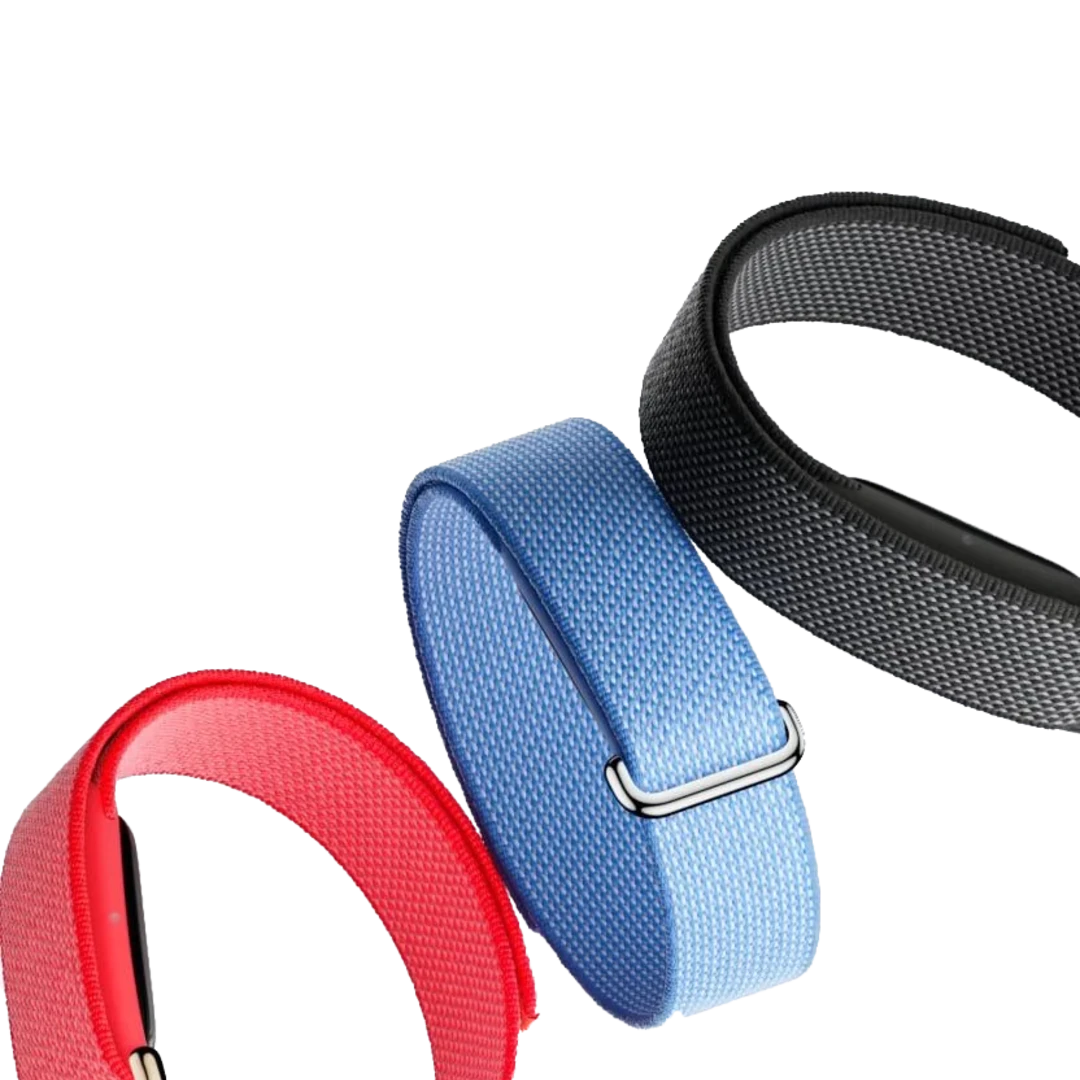
Screenless trackers are worn around your wrist as a band or on your finger as a smart ring. For accurate measurements, the most important factor is how snugly the device fits against your skin, because a tracker that slides back and forth will produce erratic heart rate readings. You can adjust a wristband using the clasp to ensure a snug fit. With a ring, you determine the size in advance—usually using a sizing kit from the manufacturer—and that’s more precise: fingers get thicker and thinner due to heat, exertion, and the time of day. Order that sizing kit well in advance of your purchase and wear the trial ring for a day, including overnight, because you can’t adjust a ring that doesn’t fit. If you’re specifically looking for a smart ring, you’ll find them in their own category on this site.
Measurement Features
Focus on the metrics you’ll actually use, not on the number of them. Heart rate, sleep, and daily activity are featured on virtually every screenless tracker; more specialized metrics vary by model and brand.
- Sleep: shows how long and how restfully you sleep. A screenless tracker is barely noticeable at night, making it easier to wear it all night long.
- Recovery and exertion: translates heart rate and rest into a daily score, which is useful if you’re training according to a schedule.
- Skin temperature and blood oxygen level (SpO2): additional metrics that you’ll mainly see as trends, not as isolated values at a single moment.
Filter by the metric you’re buying the tracker for to keep the list manageable.
Battery and charging
No screen means lower power consumption, and that’s the practical advantage of these trackers: they typically last several days on a single charge. This makes a big difference, especially for sleep tracking, because a tracker that’s plugged in overnight won’t be recording anything during the night. Be sure to check the charger, as it’s usually model-specific: rings come with their own charging tray or charging case, which you shouldn’t lose.
App and Subscription
With a screenless tracker, the app serves as the entire control panel, so it carries more weight than it does with a smartwatch. Check two things before you buy. First, make sure the app works on your phone, because not every tracker supports Android and iOS equally well. Second, check whether the brand requires a subscription for more detailed analytics. A tracker with a recurring subscription may end up costing more in the long run than a model that includes everything at the time of purchase, so look beyond the initial price.
Also keep in mind that you’re locked into the brand: if the manufacturer stops supporting the app or providing updates, you’ll be left with a tracker that no longer displays anything. And since your measurements are stored in the app and usually on the manufacturer’s servers, it’s wise to find out what happens to your health data.
Who is a tracker without a screen for?
Choose based on when you wear it, because that’s where this group differs most from a smartwatch.
Choose a tracker without a screen if you mainly want to track sleep, recovery, and daily activity and don’t want to be distracted by notifications.
Choose a regular fitness tracker or smartwatch if you want to see your data in real time while exercising, or receive messages and calls on your wrist.
