
Compare Smartphones
Smartphones—compare them all side by side here, from the simplest entry-level model to the most expensive flagship. This is the site’s most comprehensive overview, so use the filters or one of the subcategories below to quickly find the right smartphone. We don’t earn more from one brand or device than another, so the order doesn’t reflect our preferences. Virtually all the devices here are SIM-unlocked and can therefore be used right away.
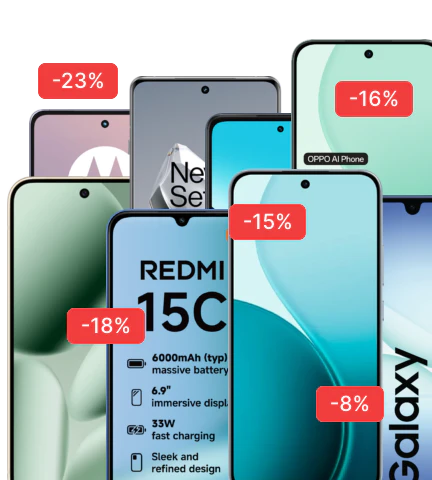
Smartphone Deals
29 products
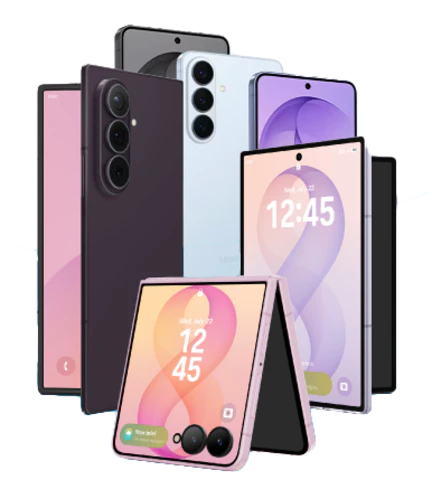
Samsung Galaxy phones
184 products
New smartphones
154 products
Android smartphones

All smartphones
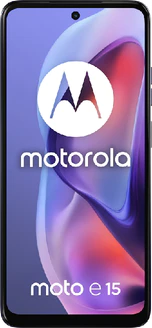
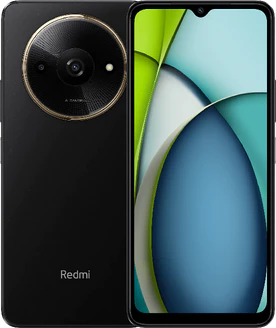
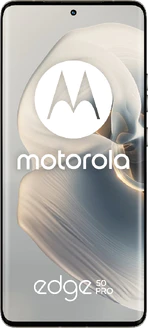
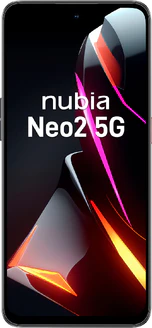
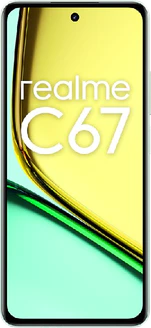
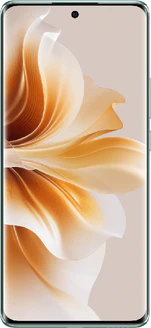
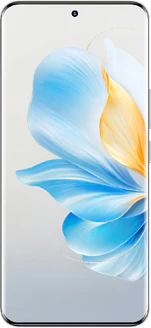

Which smartphone is right for you?
Start by asking yourself how much you want to spend and which operating system you’re looking for, because those two choices will narrow down the options the fastest. Then choose the feature that matters most to you: camera, battery life, size, or update schedule.
Compare by price range first
The devices in this overview fall roughly into four categories, and each category has its own page.
- Budget phones: a selection with a fixed price limit, which also includes phones with a numeric keypad. You get a functional phone but compromise on the camera, storage, and update cycle.
- Low-end smartphones: full-fledged smartphones with basic components, also referred to on our site as entry-level smartphones. Everything works, but photography and speed are the weak points here.
- Mid-range smartphones: everything you use on a daily basis runs smoothly; you’ll have to compromise on extreme features, such as zooming and low-light photography.
- High-end smartphones: typically feature the best cameras and screens and the longest update commitments from the major brands, at the highest price on the entire site.
If you’re looking primarily by price rather than class, the overview of budget phones is a better place to start.
Choose a budget phone if you mainly want to stay reachable or are looking for a second device.
Choose a mid-range smartphone if you want everything you do on a daily basis to run smoothly and don’t need the most extreme features.
Choose a high-end smartphone if you need to zoom in, take photos in low light, or want the longest update cycle.
Choose a lower tier if you don’t use those high-end features: that’s the easiest way to save money.
Or start with a feature
If you already know what matters most to you, these overviews will help you find the right device faster.
- New smartphones: the models that just came out, with their full update cycle still ahead of them, but also at their most expensive.
- Camera phones: the devices with the best cameras.
- Long battery life: for those who need to get through a long day without access to a power outlet.
- Compact smartphones: devices that can be operated with one hand.
- Rugged phones: built to withstand drops, dust, and water, for outdoor work.
- Foldable phones: a larger screen in your pocket, or a small device that folds open.
- 5G phones: devices that support the high-speed mobile network.
- Refurbished phones: the same model in good condition, with a warranty from the seller.
Android or iPhone?
That’s the choice that matters most, and it’s less about the phone itself than about everything else surrounding it. In the Netherlands, according to StatCounter’s data, roughly two-thirds of phones run on Android and nearly one-third on iOS; other operating systems combined account for a negligible share. Your choice determines which smartwatch, earbuds, and laptop your device will work seamlessly with, as well as which apps you’ll be able to keep.
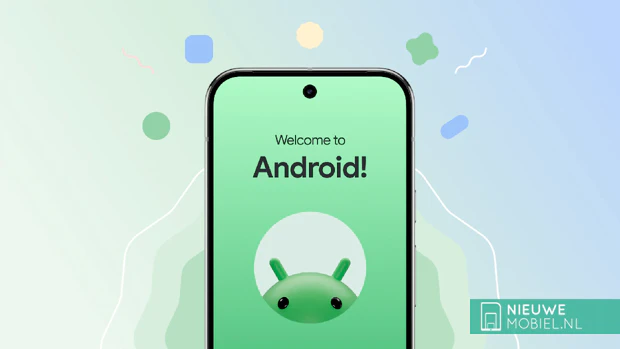
Android is developed by Google and used by many manufacturers, resulting in a vast selection across every price range and significant differences in how long a device receives updates. If you’re looking for a budget device, you’ll almost always end up with Android.

iOS is only available on the iPhone, so you’re buying a single line of devices with a single software policy. The selection of apps is vast, and Apple reviews every app that enters the App Store. Since March 2024, you’ve also been able to install apps from outside the App Store in the European Union; Apple still checks those apps for security and functionality, but doesn’t review their content, as it does for apps in the App Store. Android, meanwhile, is moving in the opposite direction: Google will require that apps installed outside the Play Store also come from a verified developer.
Note the update deadline
This is where devices that look identical in stores differ the most from one another, and there is now a legal minimum standard. According to the EU rules that have been in effect since June 20, 2025, updates must remain available for free for at least five years after the model is discontinued. Parts must be available for at least seven years.
Beyond this legal minimum, brands make their own commitments, which vary widely:
- Samsung and Google provide seven years of updates for their flagship models—starting with the Galaxy S24 series for Samsung and the Pixel 8 for Google.
- Apple specifies a minimum of five years from the initial shipment and, in practice, typically provides support for longer.
- Fairphone promises the longest support and specifies, for each model, the year until which it will provide updates.
- Entry-level and mid-range models from other brands usually have shorter support periods, and for some brands, this varies by model.
Note the difference in when support begins: a brand’s commitment starts at launch, while the legal requirement begins only when the model is discontinued.
Popular brands
In addition to price and operating system, the brand is a factor in your choice: you’re familiar with the interface, you own other devices from the same brand, or you’re already part of its ecosystem.
- Samsung: from entry-level models to top-of-the-line foldable models, in every price range.
- Apple: a single line of iPhones with a unified software policy.
- Google: the longest update promise and a strong emphasis on smart software.
- Xiaomi: great value for the money, with its own Android skin.
- Motorola: strong in the mid-range and in flip phones.
- OnePlus: flagship models with very fast charging and a custom Android layer.
- Sony: a small lineup with a unique approach to photography.
Are there alternatives to Android and iOS?
A few, but they’re niche. Since 2024, Huawei’s HarmonyOS has also been available in a version without an Android base, which no longer runs Android apps. That version is mainly found in China. The Huawei devices sold here run the Android-compatible branch without Google services. In the Netherlands, you can also buy a Fairphone with /e/OS, an Android version without Google services, while systems like GrapheneOS and LineageOS can be installed manually on an existing device.
What a smartphone actually is
A smartphone is a cell phone with an operating system, allowing you to install apps and use the device for much more than just making calls. That concept is older than you might think. The IBM Simon was unveiled in 1992 and went on sale in 1994 in a limited part of the United States, in small quantities. The Nokia 9000 Communicator from 1996 was sold internationally, but it was an expensive business device.
Symbian then brought the first widespread offering: the first Symbian phone was released in late 2000, and the system peaked in 2006, accounting for nearly three-quarters of the smartphone market according to market figures from that time. BlackBerry was a major player in the business market during those same years. Microsoft launched Pocket PC in April 2000, which was renamed Windows Mobile in 2003.
Oh, a stylus, right? We’re gonna use a stylus. No. No. Who wants a stylus? You have to get ’em and put ’em away, and you lose ’em. Yuck. Nobody wants a stylus.
When Apple announced the first iPhone in 2007, the market shifted from small screens with keyboards to large touchscreens. This heralded the end of BlackBerry, Symbian, and Windows Mobile—all of which disappeared from the market in the years that followed—and simultaneously set in motion the rise of Android.
What the smartphone has replaced
Most notably, the standalone camera. According to figures from the Japanese trade association CIPA, more than 121 million digital cameras were shipped worldwide in 2010; of the compact cameras with a fixed lens—which accounted for the largest share of that market at the time—only 1.7 million remained in 2023. Apple discontinued the last iPod in 2022, arguing that music is now available on phones, watches, and tablets.
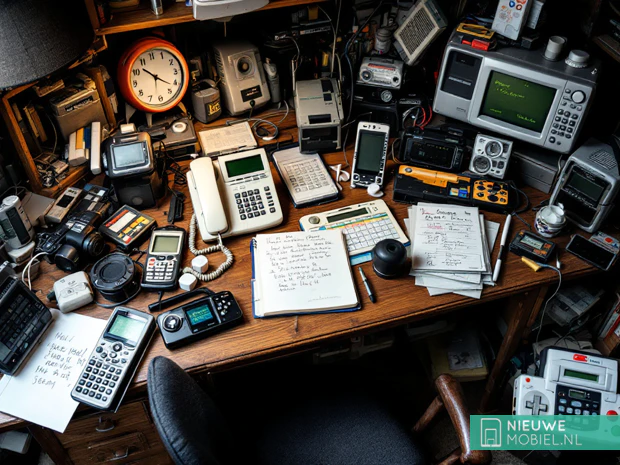
That list has grown long: in addition to compact cameras and MP3 players, you hardly ever see standalone navigation systems, voice recorders, road maps, photo albums, address books, or pay phones anymore. According to Statistics Netherlands (CBS), in 2025, more than 95 percent of people in the Netherlands aged 12 and older used a cell phone to go online. If you’re not sure where to start, begin by selecting a price range, then use the filters to choose based on camera, battery life, or size.
