Compare Huawei Smartwatches
Huawei smartwatches stand out for their battery life: while many smartwatches need to be charged every day or every other day, Huawei’s last anywhere from a few days to over a week and a half. This page brings together the Huawei lineup, ranging from a slim activity tracker to a diving watch made of sapphire glass and ceramic, independently compared and featuring current prices from partner stores. If you’re looking beyond a single brand, check out the fitness trackers or the smartwatches for kids. If you already know which model you want, you’ll find the available versions, sizes, and prices from participating stores on the model page.
Which Huawei smartwatch is right for you?
Huawei has built its lineup in tiers, ranging from a simple band that tracks your activity to a watch you can take diving with. The shape usually reveals what a model is designed for: rectangular and slim suggests sports and everyday use, while round and sturdy points to more sensors and more durable materials. So don’t start with the most expensive model—start by asking yourself how much you want your watch to track.
How do Huawei smartwatches really differ?
- Band: the narrowest and lightest design, meant to be worn and forgotten; relies on your phone for GPS
- Watch Fit: a rectangular screen on a flat watch, focused on sports and daily tracking without a bulky case on your wrist
- Watch GT: the round all-rounder and the heart of the lineup, with the longest advertised battery life, the widest range of sizes, and a separate running model
- Watch D: the exception in the lineup: a watch that measures your blood pressure with an inflatable cuff in the strap
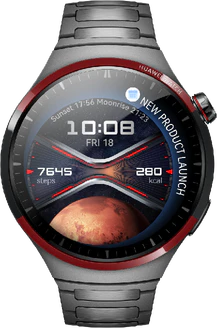
- Watch Ultimate: the top-of-the-line model: a diving watch made with the sturdiest materials and the highest water resistance
The core features across Huawei’s lineup are remarkably similar. Virtually every model in this overview tracks your heart rate, blood oxygen levels, stress levels, and sleep, and everything is managed through a single app: Huawei Health. Long battery life isn’t exclusive to the more expensive models either. What you do need to pay attention to is which sensors are included as you move up the product line, how rugged the case is, and, most importantly, which phone you’re using.
Fitness tracker or smartwatch: what’s the difference?
A fitness tracker is narrower, lighter, and cheaper, and essentially measures the same things: steps, heart rate, sleep, and workouts. What you sacrifice is built-in GPS (the Huawei Band uses your phone’s GPS), screen size, and space for additional sensors like an ECG. If you want to go for a run without your phone, your best bet is the Watch Fit. You can see all activity trackers at a glance under fitness trackers.
What does a Pro version add?
In addition to the standard model, the Huawei Watch GT and Watch Fit lines each have a Pro version, and that premium price generally delivers the same benefits: a sturdier titanium alloy case instead of steel or aluminum, sapphire glass instead of tempered glass, and an additional sensor or certification. This usually involves ECG monitoring and certification for free diving up to 40 meters according to the EN 13319 standard. Free diving refers to diving on a single breath; this certification is not intended for scuba diving. The metrics you use daily—such as heart rate, sleep, and activity—are also included in the non-Pro version. If you don’t want an ECG and don’t dive, you’re mainly paying for the materials when you buy a Pro model.
Huawei runs on its own software: what does that mean for your phone?
Huawei watches don’t run on Wear OS but on HarmonyOS, the manufacturer’s own operating system. They pair with Android phones of any brand and with an iPhone, but the app that handles this—Huawei Health—isn’t available in the Google Play Store. On Android, you can download it from Huawei’s AppGallery or the manufacturer’s website; on an iPhone, simply download it from the App Store. That’s an extra step, but not a barrier. On Android, be sure to download the app from Huawei itself: since Huawei Health isn’t in the Play Store, apps that appear there under that name aren’t from Huawei. You’ll also need a Huawei account to use Huawei Health.
The real limitation lies in what still works after that. When paired with an iPhone, notification capabilities are more limited; you can’t reply to a message from your wrist, and navigation features aren’t available. Installing additional apps is done through the AppGallery—and thus isn’t possible on an iPhone—and the same applies to contactless payments. Paying with Google Pay or Apple Pay doesn’t work on these watches anyway, regardless of your phone; contactless payments on Huawei are handled via Curve Pay, a separate service with its own account that you link to your payment card and that has also been available in the Netherlands and Belgium since April 2026. Which models support this varies by product line, so be sure to check the page for the model you’re considering. If you use an iPhone and want a watch that works seamlessly everywhere, Huawei isn’t the obvious choice; if you use Android, that caveat largely doesn’t apply.
Where battery life, materials, and water resistance vary
With Huawei, battery life isn’t a matter of yes or no, but a spectrum—and it doesn’t necessarily correlate with price. A strap or a flat Watch Fit model lasts about a week, depending on your settings, and the larger, round Huawei Watch GT models last up to 12 days with normal use, according to Huawei. One of the most expensive watches in this overview actually lasts shorter than the cheaper models: Huawei lists the Watch Ultimate 2’s battery life at approximately 4.5 days with normal use and 11 days in power-saving mode. How much battery life you actually get depends on your screen settings and how much you train using GPS.
Materials account for a large part of the price difference. At the lower end of the range, the case and glass are made of aluminum and tempered glass; moving up, stainless steel, titanium alloy, ceramic, and sapphire glass come into play. This isn’t just about luxury: sapphire glass is virtually scratch-resistant, and titanium is lightweight for its strength. Water resistance increases with price. The watches in this overview can withstand swimming and showering; some models are certified for free diving up to 40 meters, and according to Huawei, the Watch Ultimate 2 goes down to 150 meters. That top-of-the-line model can also send preset messages underwater to another watch with the same feature, within a 30-meter radius; an emergency signal reaches up to 60 meters.
What Sets the Huawei Watch D Apart
The Huawei Watch D is the only line that measures something the others can’t: blood pressure, using a real inflatable cuff built into the strap. This isn’t an estimate based on sensors, but an actual measurement. Huawei reports that the Watch D3 in the European Union is certified under the CE MDR for single blood pressure measurements, ambulatory monitoring, and pre- and post-workout measurements. If you’re considering this model, do so for that reason—not as an upgrade from a regular watch: in other respects, a Watch GT is just as good as the Watch D.
You shouldn’t expect that level of accuracy from the other measurements on Huawei watches. Heart rate, blood oxygen levels, skin temperature, and sleep stages are consumer-level metrics that help you identify trends, not diagnoses.
Which model is right for whom?
Choose a Band if you want to track your activity and sleep and barely feel your watch.
Choose a Watch Fit if you exercise frequently and also want to wear your watch at the office.
Choose a Watch GT if you want to charge it as infrequently as possible and want to choose from multiple sizes; if you’re a serious runner, check out that line for the Watch GT Runner.
Choose a Watch Ultimate if you dive or use your watch in extreme conditions.
Choose a Watch D only if you want to track your blood pressure; that’s the reason this line exists.
The lines side by side
| Series | For whom | Key features | Price range* |
|---|---|---|---|
| Strap | Daily monitoring | Slim and lightweight, GPS via your phone | € |
| Watch Fit | Exercise and daily use | Rectangular screen, flat case | €€ |
| Watch GT | All-rounders and runners | Round, longest advertised battery life, multiple sizes | €€€ |
| Watch D | Blood pressure monitoring | Inflatable cuff, CE-certified for blood pressure measurement | €€€ to €€€€ |
| Watch Ultimate | Diving and adventure | Sapphire glass and ceramic, water-resistant up to 150 meters, shorter battery life than a Watch GT | €€€€ |
*Relative price indication within this overview: more € symbols mean a higher price. See the overview above for current prices.
