Compare Phones with NFC
Are you looking for a phone with NFC? With that chip, you can make contactless payments at the register, check in on public transportation, and let the DigiD app scan your ID. Below, you’ll find a side-by-side comparison of all devices with NFC, along with their specifications and current prices. Use the filters to narrow down your selection, or click on a model to compare providers.

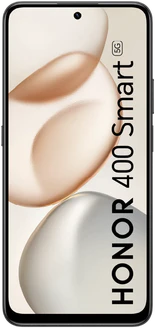
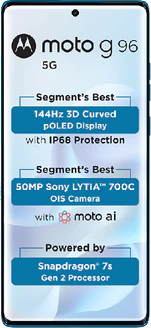
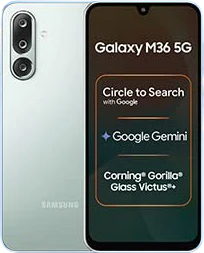
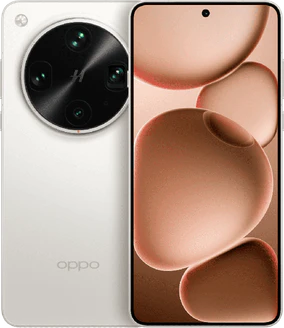
What can you do with NFC on your phone?
NFC stands for Near Field Communication and allows two devices to exchange data as soon as they come into close proximity. The chip operates at 13.56 MHz over a distance of a few centimeters. That short distance makes eavesdropping difficult, but the real security lies in the technology behind it: your card number is never transmitted, and every payment is confirmed on your device.
Contactless payments with your phone
Paying with NFC works in two steps: you add your debit card to a wallet app once, and then hold your phone near the payment terminal. On an iPhone, you confirm each payment yourself with Face ID, Touch ID, or your passcode, so the requirement to enter a PIN that applies to your debit card doesn’t apply here; on an Android phone, the device must be unlocked in any case. Your actual card number is never sent to the terminal: the wallet transmits a substitute number for that specific device, along with a one-time code for each payment. Which wallet you can use depends on your operating system and your bank.
Checking in on public transportation
With OVpay, you can check in on buses, trams, subways, and trains using your debit card, credit card, or phone. When you hold your phone up to the gate or card reader, your phone uses the same NFC chip and the same wallet as when paying at the register. Check out using the same method you used to check in. If you forget to do so, the system won’t know where you got off, and you’ll be charged the full fare; you can request a refund for that amount from the transit provider.
Scanning Your ID
The DigiD app can use NFC to read the chip in your passport, ID card, or residence permit, allowing you to verify your identity once without having to go to a counter. This works on Android phones and iPhones. Place your passport or card on the back of your phone and leave it there until the app confirms that the process was successful.
NFC, RFID, and Bluetooth: What’s the Difference?
NFC is a smart version of RFID (Radio Frequency Identification). With RFID, information flows primarily in one direction—from a card or tag to a reader; NFC communicates in both directions, so both devices can send and receive. Bluetooth has much greater range and speed, but requires pairing and power on both ends. NFC operates over a range of just a few centimeters, connects almost instantly, and works even with a battery-free tag. With many earbuds and speakers, a single NFC touch actually establishes the Bluetooth connection. The technology was developed by Philips and Sony; together with Nokia, they founded the NFC Forum in March 2004, which manages the standard.
What should you look for in a phone with NFC?
NFC isn’t a feature you necessarily have to pay extra for: the chip is found in virtually every price range, from entry-level models to the most expensive flagship devices. However, it’s sometimes missing at the very low end of the market. So what’s the difference?
How do phones with NFC differ?
- Operating system: on an iPhone, payments are made via Apple Wallet; on Android, via Google Wallet or your bank’s app.
- Paying with a smartwatch: many smartwatches have their own NFC chip and wallet, so you can leave your phone in your pocket.
- Antenna location: on most devices, it’s located in the upper half of the back, which determines where you hold your phone against the reader.
Reading tags and labels works the same on any phone with NFC; this standard is set by the NFC Forum. Payments and check-ins also depend on the software: which wallet you’re allowed to use and which apps from banks and transit providers you can install.
Be aware of NFC if you want to pay or check in with your phone, or use the DigiD app.
You can ignore NFC if you keep your debit card with you anyway and mainly use your phone for calls, messages, and apps.
Do you really need NFC?
Not necessarily. You can also make contactless payments with your debit card; on public transportation, you can use a single-ride ticket or a transit pass; and there’s an alternative way to use the DigiD app without NFC. If you just want to avoid using your phone at the checkout, a smartwatch with NFC is an option. The reverse is also true: if a device you otherwise like lacks NFC, that’s usually the only thing you’re missing, because the chip doesn’t interfere with other functions. Devices without NFC are mainly found among feature phones and dumb phones.
