Compare the Asus VivoWatch
The VivoWatch watches from Asus are designed around two measurements: blood pressure and an ECG. For the blood pressure app, Asus publishes a list of countries where it works, and the Netherlands is not included. You can read about what these devices do and don’t do in the overview below.
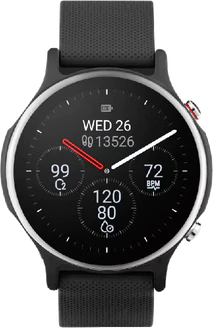
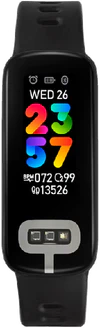
Where Asus mentions the blood pressure and ECG features
Asus is presenting the VivoWatch 6 as the first watch to measure blood pressure and an ECG with your fingertip. The brand calls the VivoWatch 6 AERO the first band capable of doing so. The product pages include a footnote regarding these two features: availability varies by region.
On its own page about the blood pressure app, Asus provides specific details. According to the brand, this service is available in Taiwan, Thailand, Hong Kong, and Vietnam. It works only in the regions where Asus offers it. Asus has not announced availability for the Netherlands or the EU.
For the ECG app, Asus does not specify any countries, only that same regional caveat. What the brand does mention is that the app has been certified by regulatory authorities in Taiwan and Thailand. According to Asus, an application is pending with the FDA in the United States.
These certifications apply to the app and not to the watch’s hardware. In its ECG announcement, Asus mentions only the VivoWatch 6 and the 6 AERO.
That’s the most critical aspect of this offering. On the Dutch product pages, blood pressure and ECG are prominently listed as features, without Asus mentioning those four countries.
That doesn’t mean such a watch won’t work here. It does mean that in the Netherlands, you’ll have to make do with what’s left: heart rate, blood oxygen, sleep, steps, and Asus’s own metrics. For a blood pressure reading that a doctor can use, a cuff-based monitor is still required.
What Asus Itself Says About the Measurements
The brand’s own disclaimer appears on the Dutch product pages. For the VivoWatch 5 and VivoWatch 6, it states that they are not medical devices; for the VivoWatch SP and 6 AERO, it states that they are not medical equipment. In all four cases, the same rule applies: the measurement results are intended for reference only.
At the same time, Asus refers to the VivoWatch 6’s sensors as “medical-grade,” just as it does in the meta description for the VivoWatch SP. The brand also states that the watches support the “Software as a Medical Device” standard. However, it does not specify which standard or approval this refers to.
A footnote for the VivoWatch 6 and the 6 AERO includes a statement that qualifies that claim. According to Asus, its proprietary HealthAI 5.0 health algorithm is intended solely to display sensor signals for personal use. According to the same footnote, it falls outside the scope of that standard, and Asus does not use it for the blood pressure or ECG functions.
Who the ECG feature is not intended for
In its own user manual, Asus describes the measurement as a single-channel ECG. It is intended to allow a doctor to assess whether atrial fibrillation is present or if the heart rhythm is normal.
In doing so, the brand excludes certain users. The measurement is not intended for people under the age of 22, nor for those who already have a known arrhythmia. Asus also states that you should not use the feature if you have a pacemaker, an ICD, or any other implantable electronic device.
If your resting heart rate suddenly drops below 50 or rises above 120, Asus advises consulting a doctor as soon as possible. According to the company, the reading itself is not a complete diagnosis and must be interpreted by a doctor.
The models in this overview
The differences between the four models lie in their sensors and battery life.
| Model | Typical battery life | In power-saving mode | Health sensors according to Asus |
|---|---|---|---|
| VivoWatch 6 | 9 days | 9 to 14 days | ECG, PPG, bioimpedance |
| VivoWatch 6 AERO | 5 days | 7 days | ECG, PPG |
| VivoWatch 5 | 10 days | 14 days | ECG, PPG, infrared, temperature |
| VivoWatch SP | 10 days | 14 days | ECG, PPG |
See the overview above for current prices.
Only the VivoWatch 6 measures body composition using bioimpedance. Asus also mentions heart rate variability only for that model. The product page for the 6 AERO does not list stress measurement.
The battery life figures require some clarification in one instance. For the 6 AERO, the same page lists “5 days” and “up to one week” side by side. The specifications resolve this: 5 days under typical use and 7 days in power-saving mode.
Asus publishes test conditions—including the measurement interval and screen brightness—only for the VivoWatch 5 and the VivoWatch 6. These details are not included for the SP and the 6 AERO.
All four models work with Android and iPhone devices via the ASUS HealthConnect app; an Asus phone is not required. According to the specifications, the VivoWatch SP and the VivoWatch 5 require Android 4.4 or iOS 11.0. For the VivoWatch 6 and the 6 AERO, the requirement is Android 8 or iOS 13.0. However, the App Store states that the app itself requires iOS 15.6 or higher—which is newer than what all four models list in their specifications.
First, check where the features are available. Asus lists the blood pressure app as available in Taiwan, Thailand, Hong Kong, and Vietnam. For the ECG feature, the brand does not specify any country.
Is there enough left? Asus lists heart rate, blood oxygen, sleep, and steps without any regional restrictions, just like a standard activity tracker.
What Asus publishes and sells in the Netherlands
All four models have a Dutch-language product page. For the VivoWatch 6, the marketing text is in Dutch and the specifications table is in English. The Dutch filter page for the line also lists three other models: the VivoWatch 5 AERO and two versions of the VivoWatch BP.
On the Dutch “Where to Buy” pages for the VivoWatch 5, the VivoWatch 6, and the VivoWatch 6 AERO, there is one retailer with stock: Asus’s own eStore. We were unable to determine this for the VivoWatch SP.
One detail is worth noting. On the VivoWatch 6 product page in Asus’s own Dutch online store, the medical disclaimer is not in Dutch. Anyone visiting that page directly will only see the English line regarding regional availability.
Asus does not publish an update schedule for wearables. For its phones, the brand provides an end date for security updates for each model, but the VivoWatch models are not included in that list.
