Huawei Plans Global Comeback with HarmonyOS
Will Huawei succeed where BlackBerry, Microsoft, and Palm failed?
Huawei is planning a comeback in the smartphone market outside of China. During an international press conference in Shenzhen on October 3, CEO Richard Yu said that the company wants to return to the global market with its own operating system, HarmonyOS. This is just a plan, not a final decision. Yu did not mention a date, countries, or devices. For the Netherlands, this would mean the return of a brand that virtually disappeared from stores following the U.S. trade ban.
A striking ambition for a company that, in the second quarter of 2020, was still the world’s largest phone maker. Richard Yu, who leads the consumer division at Huawei, spoke of an initial plan during the meeting itself. The press release that Huawei sent out afterwards is also cautious:
Huawei is considering gradually bringing HarmonyOS to the global market in the future and is attempting to return to the market outside of China step by step.
Huawei says the HarmonyOS ecosystem now counts more than 90 million devices, 450,000 apps and services, and 11 million developers. Impressive numbers, but they come almost entirely from China.
Why Huawei phones disappeared from stores
In 2019, the United States imposed a trade ban on Huawei. As a result, new Huawei phones were no longer allowed to receive Google services: no Play Store, no Gmail, no Google Maps, and no YouTube app. Technically, they still ran on Android, but for the user, it was a half-baked product. Customers returned the devices to stores en masse because their trusted apps were missing. The confusion was too great. New devices from the Pura and nova lines still came to Europe, but stores barely stocked them anymore, possibly also due to those high return rates. Huawei’s smartwatches and tablets remained available for sale.
A third ecosystem: where BlackBerry, Microsoft, and Palm ran aground
For its return, Huawei is not opting for Android without Google again, but for a completely proprietary platform. In China, Huawei phones have been running on a version of HarmonyOS without an Android base since 2024, known during development as HarmonyOS NEXT. Android apps no longer work there: every app must be rebuilt for HarmonyOS. This makes HarmonyOS a third ecosystem alongside iOS and Android. And that is exactly where big names previously failed:
- BlackBerry: launched the completely revamped BlackBerry 10 in 2013. The selection of apps lagged far behind and in 2015, BlackBerry released an Android phone itself.
- Microsoft: poured billions into Windows Phone and even acquired Nokia’s phone division. Popular apps stayed away or arrived late, and ultimately, Microsoft pulled the plug on its phone platform.
- Palm: received rave reviews in 2009 for webOS on the Palm Pre. HP acquired Palm in 2010 and stopped with webOS devices as early as 2011.
The common denominator is always the same chicken-and-egg problem: without apps, no users, and without users, developers do not build apps. Yu is familiar with that history as well. He himself cited Windows Phone, Samsung’s Bada, and Nokia’s Symbian as operating systems that did not make it, and argued that Huawei has succeeded.
What Huawei does differently
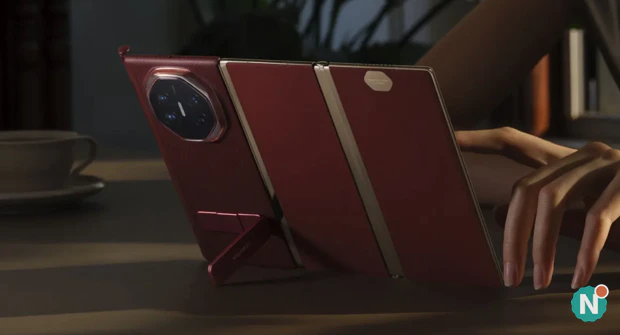
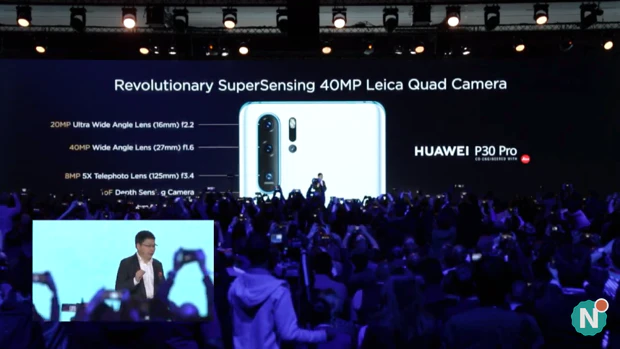
Yu is not entirely wrong. Huawei’s biggest plus point is the hardware, and that was superb for years. In terms of cameras, Huawei was miles ahead. The P30 Pro already had a periscope zoom camera in 2019; Samsung only came out with that a year later, with the Galaxy S20 Ultra. Huawei was also early with foldables: the Mate X appeared in the same year as Samsung’s first Galaxy Fold, and with the Mate XT, Huawei released the first phone in 2024 that can be folded twice. With the disappearance of Huawei, the market lost a highly innovative player that kept brands like Samsung on their toes.
In addition, Huawei has something that BlackBerry, Microsoft, and Palm never had: a home market of tens of millions of users, for whom developers are already building apps. HarmonyOS therefore does not have to start from scratch. And Huawei has little choice: returning with Google services is not possible as long as the trade ban applies.
But those apps are Chinese. For a Dutch user, what counts is whether their banking app, the NS app, DigiD, or their favorite messaging app works. The makers must build these one by one for HarmonyOS, for a platform that does not yet have any users here. HarmonyOS already runs on Huawei’s smartwatches outside of China, but a watch only needs a handful of apps. A phone is a different story.
What does this mean for you?
In the short term, nothing changes. However, there are a few things to keep in mind:
- Check your apps first: if a HarmonyOS phone ever comes to the Netherlands, check before purchase whether your banking app and other apps you use daily are available.
- Huawei is here with wearables: anyone who wants to try the brand can already turn to the Huawei smartwatches.
Huawei still has the hardware, and an extra innovative player would be good for the entire market. But as long as Huawei cannot name a date, devices, or European apps, this is primarily an intention.