Phones with 10,000 mAh batteries on the rise, but solve different problem than you think
Record-breaking battery sounds like three days without a charger, but primarily gains years in lifespan
Phones with batteries of 10,000 mAh or more are becoming more popular. This suggests the end of daily charging: charge once and go for three days. However, look beyond the number on the box and you will see that such a large battery solves a different problem entirely. Not charging, but draining.
What do the Oppo A7 Pro Max, the Honour Power2, the vivo Y600 Pro and the Realme P4 Power have in common? They all have a built-in battery of at least 10,000 mAh without looking like a brick. These models are not (yet) available in the Netherlands, more on that later, but they exemplify a trend that has been underway for some time.
More mAh, not proportionally more hours
For years, the battery of a smartphone plateaued around 5,000 mAh. That changed with the arrival of silicon-carbon batteries. By adding silicon to the anode, more energy fits into the same space. Chinese manufacturers like Honour, OnePlus, Oppo, vivo and Xiaomi were the first to embrace the technology.
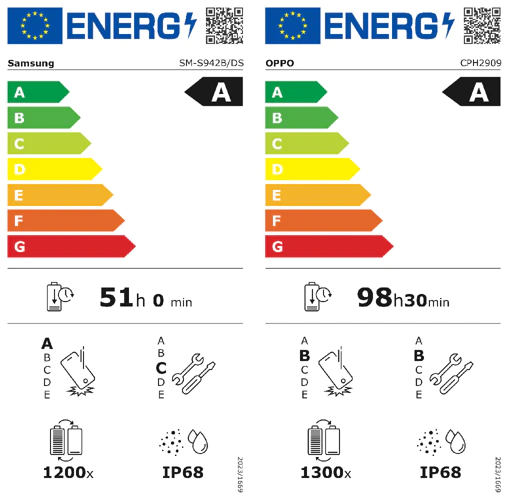
Yet, battery life does not grow at the same pace. Since June 2025, every new smartphone in the EU must have an energy label, and the corresponding data is listed in the European product database EPREL. If you compare the battery capacity and the measured runtime per charge of different devices, you see that the runtime grows less rapidly than the capacity: 2.3 times as many mAh in the A7 Pro Max yields 1.9 times as many hours as in the Galaxy S26.
Where does that energy go?
Anyone familiar with the PC world recognises the pattern. Processors get faster every year, but a computer hardly feels any faster as a result. The extra processing power is consumed by heavier software, smoother animations and screens with more pixels. Computer scientist Niklaus Wirth summarised this as early as 1995: software gets slower more rapidly than hardware gets faster.

That is exactly what is happening with smartphones. The extra capacity goes to screens that are brighter than ever, higher refresh rates, AI functions that run on the device itself and more powerful 5G modems. A portion is also used to make the phone thinner. The large battery therefore primarily pays the bill for new features.
Three days without charging is not a goal
Suppose your phone does last three days. Even then, it is not necessarily convenient. Charging daily is a habit: phone on the charger in the evening, done. Charging once every three days is not a rhythm, and if you have no rhythm, you forget it. There is a good chance that you will discover your battery is empty on day three, while on the road. A phone that lasts a long time can therefore let you down more often than a phone you dutifully charge every nite.
What it does solve: the draining
The real gain of a large battery is in the margin. You see that margin at three moments:
- The heavy day.
Navigating, using the hotspot for your laptop, a day at a festival or a long trip: with a standard battery you often won't make it to the evening, but with 10,000 mAh you will. - The old battery.
Every battery wears out. After three or four years, a worn-out 5,000 mAh battery often no longer makes it thru the day. A 10,000 mAh battery still has well over a full day left after the same wear. Especially now that manufacturers like Samsung and Google promise up to seven years of updates, the battery is finally keeping pace with the lifespan of the device. - Milder charging cycles.
Those who simply keep charging every nite discharge the battery less deeply. That is favourable for long-term wear.
The advice is therefore simple: keep charging daily. Then you start every day with a full battery and a substantial reserve, and that reserve remains intact even after years of wear. The battery is therefore no longer the reason to replace a perfectly working phone after a few years: you simply use it for longer.
Doesn't such a large battery take forever to charge?
A larger battery needs more time to reach full capacity. Fast charging helps, but is known to cause the battery to wear out faster. With a large battery, that is not so bad. For wear, it is not the number of watts on the box that counts, but the charging current in relation to the capacity. The same power puts about half as much strain on a 10,000 mAh battery as on a 5,000 mAh battery. Moreover, many of these batteries consist of two cells, which share the current. And those who charge at nite notice nothing of the longer charging time.
For whom is a phone with 10,000 mAh interesting?
A phone with a 10,000 mAh battery is especially interesting for heavy users, for those who are often on the road and for those who want to use a phone for a long time. For them, the large battery means the phone will be just as reliable in four years as it was on day one. For those who charge their phone every nite and replace it after two years anyway, it is less useful. For that user, 10,000 mAh remains primarily an impressive number on the box.
Can you buy such a phone in the Netherlands?
In short: no. Anyone in the Netherlands looking for a standard smartphone with a 10,000 mAh battery will not find one for the time being. The devices that break the barrier, such as the Honour Power2, the vivo Y600 Pro and the Realme P4 Power, remain reserved for China and India. The Oppo A7 Pro Max has since appeared in Germany and Austria, with the full 10,000 mAh. Proof that it is possible in Europe, only the Netherlands is not on the list.
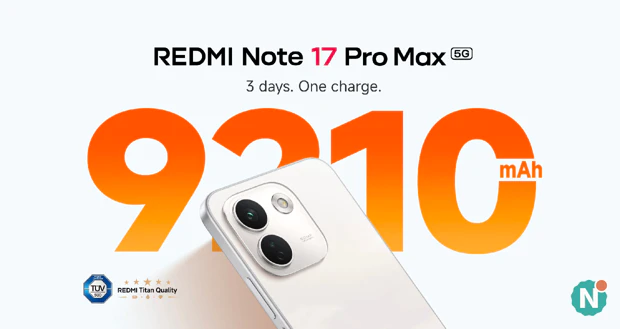
The closest thing is the Xiaomi Redmi Note 17 Pro Max. Elsewhere in the world it has a 10,000 mAh battery, but Xiaomi reduced the battery for the European market to 9,210 mAh. Still one of the largest batteries you will find in a standard smartphone here.
If you want more than 10,000 mAh now, you end up with rugged phones from brands like Doogee and Oukitel. Those go up to 22,000 mAh, but at over two centimetres thick, they are more of a brick than a smartphone.
Why the European version is often smaller
Anyone who follows a new Chinese device often sees it happen: in China the device comes with a record battery, in Europe with a smaller one. That has to do with the route to Europe, and that often goes by air. According to international air freight rules, a loose lithium cell of more than 20 Wh counts as full-fledged dangerous cargo. A 10,000 mAh battery in one cell is well above that.
That limit has a good reason. A damaged or defective lithium cell can overheat and catch fire, and such a fire does not extinguish by itself: the cell produces its own heat and spreads to adjacent cells. In an aeroplane, at kilometres of altitude and far from a runway, that is life-threatening. The more energy in one cell, the more violent such a fire is. Above 20 Wh, strict requirements therefore apply to packaging, labelling and quantities, which makes transport expensive and cumbersome. Manufacturers therefore split the battery into two smaller cells or choose a smaller battery for Europe.

How real that risk is became clear twice in September. On September 18, KLM flight KL735 from Schiphol to Curaçao turned back over the Atlantic Ocean after a power bank caught fire. The power bank belonged to former KLM top executive Camiel Eurlings, who sustained minor burns. More than a week later, a Lufthansa plane on its way from Frankfurt to Lisbon had to divert to Lyon, again because of a burning power bank. In both cases, the crew had the fire quickly under control.
It is not permitted to use or charge your power bank on board.
Power banks on board: these are the rules
At KLM and Lufthansa you may take a maximum of two power banks, only in your hand luggage and up to 100 Wh each. For 100 to 160 Wh you need prior permission from the airline, above that it is not allowed. A power bank of 10,000 mAh is well below that limit at about 37 Wh.
Just like KLM, Lufthansa prohibits the use and charging of power banks during the flight. At KLM, the power bank must always stay with you. Lufthansa also prohibits storing them in the overhead bins: it must be in the seat pocket, on your body or in your bag under the seat.
If the capacity in Wh is not on your power bank, it is not allowed on KLM. Read the current rules at KLM and Lufthansa.
A European rule is added to that. Since June 2025, a smartphone battery in the EU must still have at least 80 percent of its capacity after 800 full charge cycles. The EU wants phones to last longer and end up in the trash less quickly. Silicon-carbon batteries are still relatively new, and those who want to meet that requirement sometimes choose a more conservative, smaller battery.
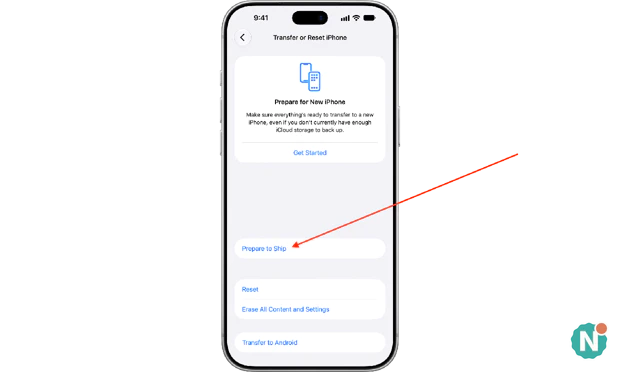
Apple chose a different route with the iPhone 18 Pro Max. That is the first iPhone with a single-cell battery of more than 20 Wh. A firmware limit keeps the capacity below that limit as long as the device is on its way from the factory. Only when activating the phone is the full capacity released. If you send it in later for repair or trade-in, the 'Prepare for shipping' function temporarily sets the charging limit to 80 percent. If the Android world adopts this trick, the difference between the Chinese and European versions could disappear.
Where are the big brands?
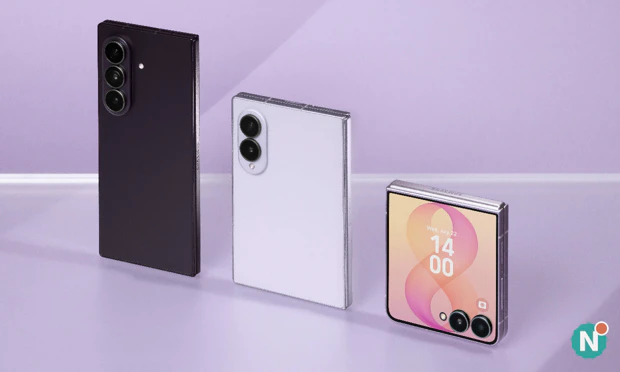
Strikingly enough, the record batteries do not come from Samsung, Apple or Google. Their devices remain stuck around 5,000 mAh. Samsung has started sparingly with adding silicon-carbon to the Galaxy Z Fold 8 and Z Flip 8, but it is not much yet. There is no question of a full embrace yet, altho there are understandable reasons for that.
Silicon expands significantly more during charging than the graphite in a classic battery. That gives mechanical tension in the cell. Moreover, silicon reacts more fiercely with the liquid in the battery, causing slightly more capacity to be lost with every charge cycle. The technology therefore gains in capacity, but potentially loses out on lifespan. Manufacturers therefore limit the amount of silicon in their cells. How silicon-carbon batteries perform after five or seven years remains to be seen in practise.
For the big brands, that risk weighs heavily. They sell tens of millions of devices per year and promise up to seven years of updates. A battery that deteriorates faster or swells after three years is then a costly problem. Samsung knows how that feels: in 2016 it had to recall the Galaxy Note 7 worldwide because of batteries that caught fire. Yet one does not have to exclude the other. Even if a silicon-carbon battery wears out a bit faster, a 10,000 mAh battery still has more left after years of use than a classic 5,000 mAh battery.
Result: the phone becomes its own power bank
The power bank was always the bandage for draining. If the phone solves that problem itself, that bandage loses its function, at least in the mid-range. An average power bank of 10,000 mAh delivers roughly two-thirds of its capacity to the phone due to conversion losses. You therefore fill a device with a 10,000 mAh battery for about two-thirds with that. You are lugging a second brick around for not even a full charge. And those who no longer take a power bank on board also do not run the risk of being the next one to cause a flight to turn back.
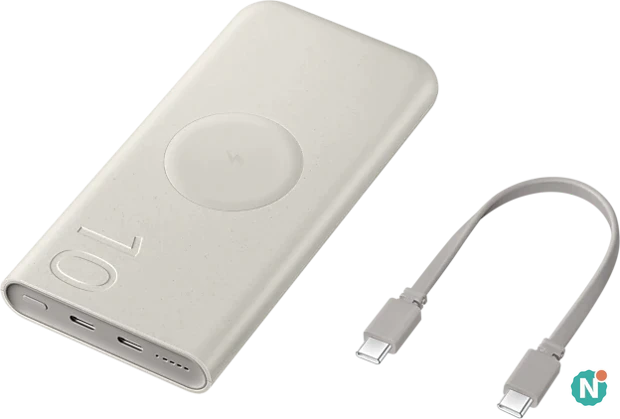
With that, the power bank does not disappear yet. Small magnetic examples remain handy for devices with a smaller battery, such as most iPhones and compact models. Large power banks of 20,000 mAh and more shift to another goal: charging a laptop, multiple devices at the same time or a weekend of camping. Moreover, many phones with reverse charging can charge your earbuds or smartwatch themselves. Thus, the power bank joins the list of devices that the smartphone has taken over, after the mp3 player, the compact camera, the navigation device and the alarm clock.