Power banks
Need a power bank? Even the biggest battery runs out of power sometimes. And that often happens at the worst possible moment. Power banks were invented for just such situations. Charge your smartphone or tablet in no time. You can find all the external rechargeable batteries available here.
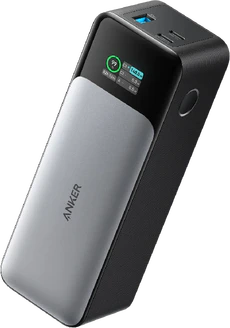
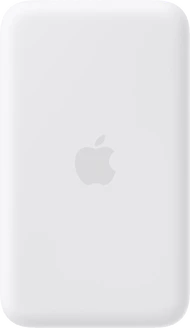
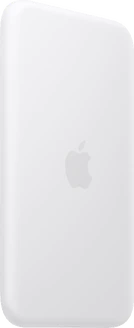
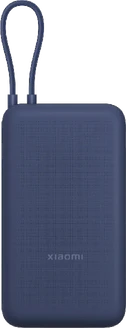
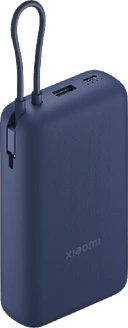

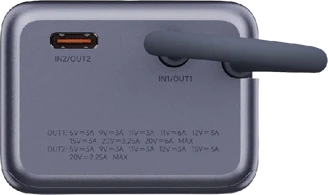
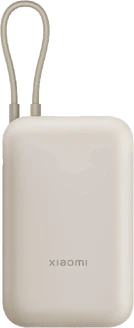
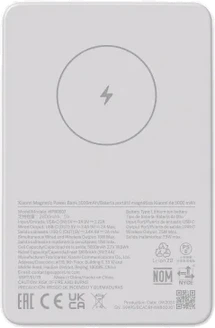
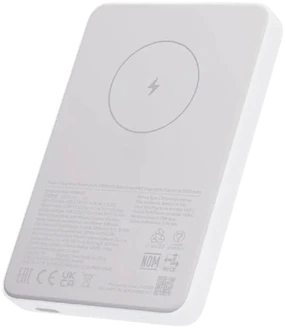
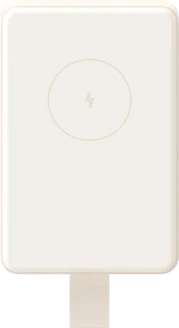
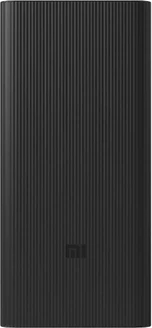
A power bank is a battery with a USB port. The sole purpose of a power bank is to charge another device, such as a smartphone, a tablet or wireless earbuds. Power banks come in all sorts of sizes, from large to small. Here, we explain what to look out for if you’re thinking of buying one.
Choose the right capacity
Generally speaking, the larger the power bank, the larger the battery inside it. We measure battery capacity in mAh (milliampere-hours). The higher this number, the more power the power bank can hold. It’s more practical to gauge a power bank’s capacity by how many times you can charge your phone with it. Use the following table:
- Up to 5,000 mAh: Charge your phone once
- Up to 10,000 mAh: Charge your phone twice
- Up to 20,000 mAh: 4 charges for your phone or 1.5 charges for your tablet
- From 25,000 mAh: Charge multiple devices
Of course, you don’t want to be stuck on the charger for too long, even if it’s portable. So choose a power bank that’s compatible with your smartphone. If your smartphone uses one of the following fast-charging technologies, it’s advisable to buy a power bank that supports it;
- Qualcomm Quick Charge
- Samsung Adaptive Fast Charge
- Oppo/OnePlus SuperVOOC
Please note that these types of fast-charging technologies require the use of a compatible USB cable. This is due to the higher power outputs, which mean certain requirements apply to the cable.
Tips for choosing a power bank
Do you want to be able to charge multiple devices at the same time? Then choose a power bank with at least 2 USB ports. Do you also want to be able to charge older devices? Make sure your power bank has a USB-A port as well, as older cables fit these better. Otherwise, opt for USB-C.
Do you want to be even more mobile? Then have a look at power banks with wireless charging. You simply place your phone on the power bank to charge it. That saves on cables – provided your mobile supports it, of course.
