
4G phones
Need a 4G phone? Here’s a handy overview of phones available with 4G, sometimes also known as LTE. You can also check here whether your phone is 4G-compatible. You’ll see straight away if it’s available and can easily compare prices, including those with a contract if you wish.

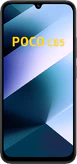
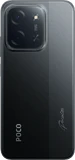

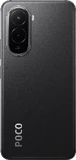
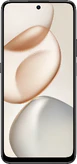
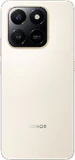
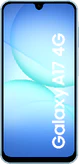

4G is a technology that allows you to access high-speed mobile internet whilst on the move. It is already the fourth generation of mobile telecommunications standards and thus succeeds 3G. 4G is also known as Long Term Evolution, or LTE for short.
To use 4G, you not only need a mobile phone that supports 4G, but you’ll also need a suitable contract or pay-as-you-go plan. Furthermore, you must be within the 4G coverage area; in other words, there must be signal reception. Almost all Dutch mobile network operators now offer nationwide 4G coverage, although there are still areas with reduced coverage, known as ‘blind spots’ or ‘grey spots’. At home, you will usually connect to your own Wi-Fi network, and no data will be sent via the 4G network.
4G speed
4G has a theoretical maximum download speed of 1000 Mbit/s and an upload speed of 500 Mbit/s. These speeds will not be achieved in practice; the average speed is closer to 50 Mbit/s. However, this is still many times faster than 3G (also known as UMTS). You can test the speed of your current connection straight away on websites such as speedtest.net.
Bands
4G operates on so-called bands, each with its own frequency. A 4G phone does not need to support every band. As mobile network operators use their own bands, you’ll need to check whether your future mobile phone is compatible with your provider’s 4G network. Most 4G phones available here in the shop will work seamlessly with the bands used here, but this is not the case for some imported models. For example, some Xiaomi phones do not work on our 4G networks. We try to list the supported 4G bands in the specifications for every new phone we add.
4G in the Netherlands
| Network provider | Bands |
|---|---|
| KPN | 1, 3, 7, 20 and 38 |
| Odido | 1, 3, 7, 8, 20 and 38 |
| Vodafone | 1, 3, 7, 20 and 28 |
Belgium
| Provider | Bands |
|---|---|
| Base | 3 and 20 |
| Orange | 3 and 7 |
| Proximus | 3, 7 and 20 |
Frequencies
Each band operates on its own frequency. You can see exactly which ones in the table below. Sometimes manufacturers provide information about supported frequencies rather than bands. You can use the information below to look up exactly which band is meant. We have limited ourselves here to the frequencies in use in Europe.
| Band | Frequency |
|---|---|
| 1 | 2100 MHz |
| 3 | 1800 MHz |
| 7 | 2600 MHz |
| 8 | 900 MHz |
| 20 | 800 MHz |
| 28 | 700 MHz |
| 31 | 450 MHz |
| 38 | 2600 MHz |
| 40 | 3500 MHz |
4G categories
Not every 4G phone is equally fast. This is because the 4G standard has various categories. Each category has a number with its own maximum download and upload speeds. Generally speaking, the higher the number, the faster the speed. For example, LTE Cat3 has a maximum speed of 100 Mbit/s, Cat4 150 Mbit/s, Cat6 300 Mbit/s and Cat9 450 Mbit/s. We try to include the LTE category for every new phone we add. You’ll find this under the specifications.
4G+
Technology never stands still, and work is now well under way on the successor(s) to 4G. In the meantime, providers are trying out clever tricks to further increase 4G speeds. One example of this is the bundling of multiple frequencies, also known as Carrier Aggregation. This technology is now commonly referred to in the market as 4G+ or ‘4G booster’, although the official term is LTE Advanced. The maximum 4G+ speed currently advertised by providers is 300 Mbit/s. If you want to use 4G+ or LTE Advanced, both your provider and your mobile phone will need to support it. Furthermore, you’ll need a subscription on which 4G+ has been activated. You can tell whether your mobile supports 4G+ or LTE Advanced by checking that it supports at least LTE Cat6 or higher. If so, your mobile is compatible.
