
5G smartphones
Need a 5G smartphone? We have listed all smartphones with blazing-fast 5G mobile internet for you here. All these models can handle extra-fast internet on the go. You can also filter further to find the smartphone you are looking for.


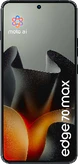
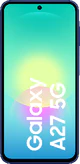
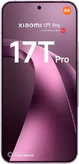
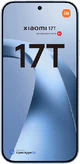


5G is a way to access mobile internet at lightning speed. Whereas 4G was still comparable to broadband internet at home, 5G corresponds to gigabit internet. Besides faster speed, 5G offers other advantages.
What is 5G?
5G is the fifth generation of mobile communication technology. It is the successor to 4G (LTE Advanced), 3G (UMTS, LTE) and 2G (GSM). 5G should achieve theoretical speeds of 20 Gbit per second but in practice will be lower. Besides higher speed, there is lower latency. Because transmitter and receiver do not have to wait as long for each other, new possibilities arise, including real-time applications.
5G in the Netherlands
All Dutch providers currently have a functioning and nationwide 5G network. Due to the delay in releasing the 3.5 GHz frequency, the promised speed will be disappointing. With that frequency also auctioned off in early 2024, providers will make the necessary changes to take advantage of faster 5G.
| Provider | Bands |
|---|---|
| KPN | 28 and 78 |
| Odido | 28 and 78 |
| Vodafone | 3 (DSS; Dynamic Spectrum Sharing) and 78 |
5G will allow faster movie downloads or mobile gaming. For mobile want to work, the higher speed will also help to share files quickly. For all those others, a 4G subscription and mobile will also suffice.
Applications 5G
Besides even faster internet via our mobile, 5G will achieve even more. It will be at the root of Internet of Things (IoT) where every device has a connection to the internet. Self-driving cars will also benefit from 5G because of its low latency. This allows such cars to exchange information much faster among themselves, which is necessary given the relatively high speeds. Online gaming will also be a possibility.
Problems of 5G rollout
The introduction of 5G was seriously delayed in the Netherlands. In a European context, it was agreed to use the 3.5 gigahertz (GHz) frequency for this purpose. For a long time, the listening station in Burum (Friesland) used this frequency. It was even forbidden to use this frequency above the imaginary Amsterdam - Zwolle line.
The ministry announced in late 2018 that it was unavoidable to move the eavesdropping station abroad. In 2024, the frequency was still successfully auctioned off.
5G phones
The first 5G phones did not see the light of day until 2019. This was partly because the 5G standard had not yet crystallised but also because 5G modems were a long time coming. Meanwhile, Qualcomm has announced the Snapdragon X50 5G Modem and Huawei the Balong-5000 chip.
Sub6 and mmWave
Like 3G and 4G, 5G uses radio waves of a certain frequency. Generally speaking; the lower the frequency the slower the data transfer and the greater the range. Compare it to noise pollution from the neighbour's stereo. There, you also hear bass more often. This is because they pass through buildings more easily than treble. The same principle works with the frequencies that 5G uses.
Everything below the 6 GHz limit is called Sub6 and is basically meant for better coverage over a large area but offers limited speed gains compared to 4G. Above the 6 GHz limit is also called mmWave or millimetre wave and promises much higher speeds of up to 2 Gbit/s.
| Band | Frequency |
|---|---|
| n1 | 2.1 GHz |
| n3 | 1.8 GHz |
| n7 | 2,6 GHz |
| n8 | 900 MHz |
| n20 | 800 MHz |
| n28 | 700 MHz |
| n38 | 2,6 GHz |
| n78 | 3.5 GHz |
| n257 | 28 GHz (mmWave) |
| n258 | 26 GHz (mmWave) |
Dutch telecoms providers are using Sub6 5G. Health effects are still questionable about mmWave and therefore it is not yet used commercially.
