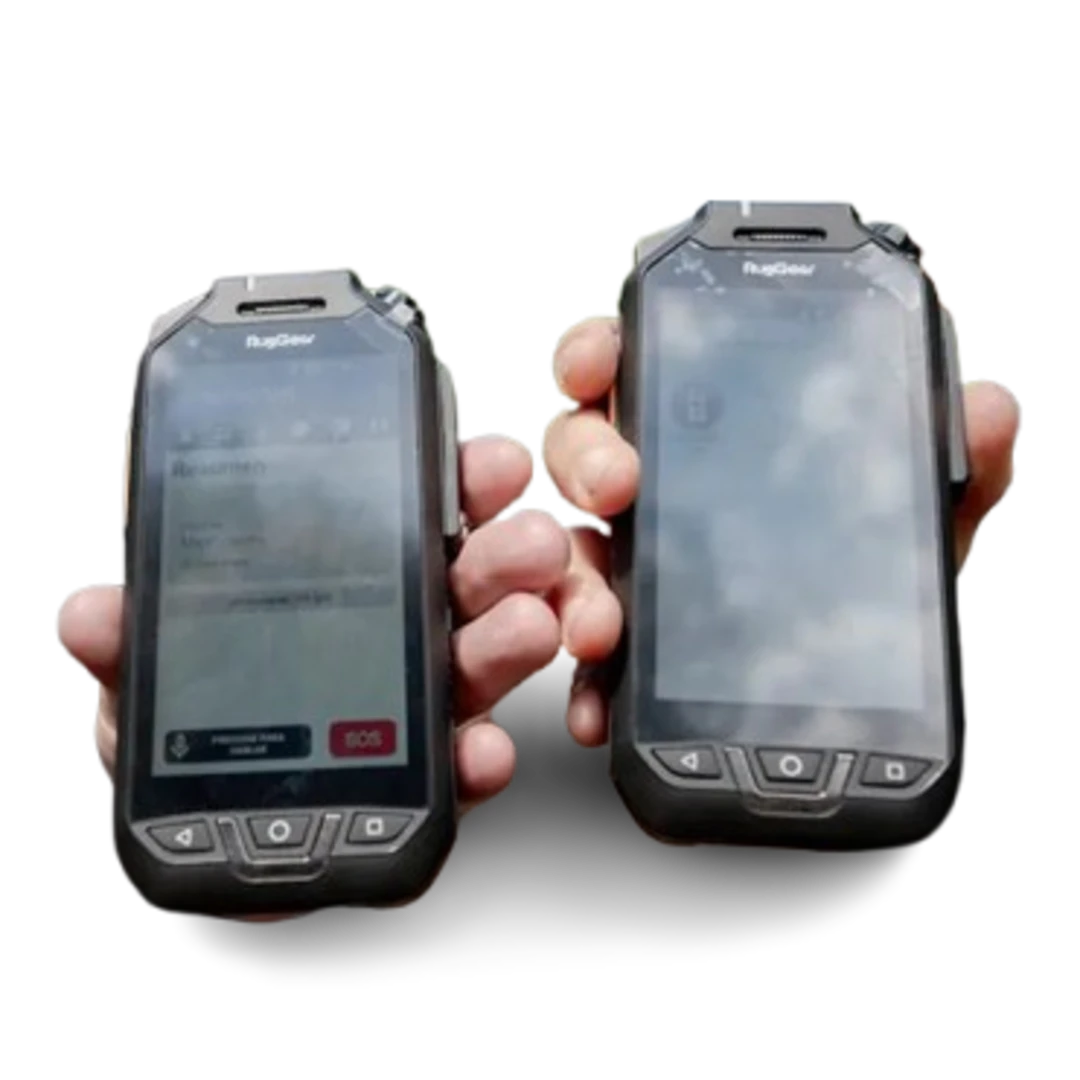
RugGear phones
RugGear phones are all about one thing: staying in touch in places and at times when communication simply cannot fail. The brand supplies robust phones to emergency services, industry and private network operators, and prioritises accessibility, sound quality and operation whilst wearing gloves over screen and camera features. In the Netherlands, sales are mainly channelled through business suppliers, so the range available to private individuals is more limited than with a standard mobile phone brand. We do not earn more from one brand or handset than from another. Below, you can read what to look out for with this brand: the handset type, the Android version, the sound quality and the ease of use whilst wearing gloves.
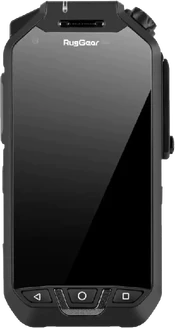
Which RugGear phone suits your work?
Start by considering how you want to communicate. RugGear designs its handsets around push-to-talk over the mobile network, and the buttons, speaker and casing are tailored to this. Anyone looking for a robust everyday smartphone will be focusing on very different features to someone who needs a handset that has to operate on a specific communications network.
Push-to-talk: what PTX and MCX mean
PTX stands for Push-to-X, MCX for mission-critical. You won’t come across either of these terms with standard mobile phone brands. PTX handsets are designed for push-to-talk over the mobile network, with a physical button on the side rather than an app that you first have to open. The MCX models are more robust and, according to RugGear, certified to operate on emergency networks in Europe and North America.
This distinction determines who a particular model is intended for. A PTX handset is sufficient for a team that wants to maintain direct contact amongst themselves. An MCX handset is designed for organisations that need to be able to operate on a specific network, and that is rarely a choice you make as an individual user.
For Dutch readers, there is an important caveat to note. Communication by the Dutch emergency services runs via C2000, and that network operates on TETRA, not on 4G or 5G. An MCX handset therefore does not work on C2000.
How RugGear phones really stand out
The range varies from simple handsets to fully-fledged Android smartphones. Four factors make the difference.
- Device type: from a compact model that you can operate with one hand to a smartphone with a large screen on which you can also fill in a report or use sat-nav whilst on the move.
- Android version: the main pitfall with this brand. The range spans several Android generations, from versions that haven’t received security updates for years to more recent ones. Check this for each model, and for older handsets, pay attention to VoLTE support: making calls via 3G is no longer possible in the Netherlands.
- Sound: in a machine hall or on a building site, the speaker is more important than the camera. The heavier models place a strong emphasis on this, with a powerful front-facing speaker.
- Controls and battery: physical buttons you can press whilst wearing gloves, a screen that remains legible in bright sunlight, and, on some models, a battery you can replace yourself. A casing designed to withstand a fall does, however, make the device thicker and heavier than a standard smartphone.
When weighing up your options, bear one thing in mind: the price of these devices is down to the certification, the casing and the communication technology. If you compare such a phone with a standard smartphone featuring similar hardware, the comparison usually favours the standard smartphone, whilst you’re paying for something different here. If you’re looking for processing power or photo quality, this brand isn’t the right place to start.
What all RugGear phones have in common
There’s one aspect of this range where you don’t have to make a choice: build quality. Every model is built to withstand drops, dust and water, and virtually every model has a dedicated side button for push-to-talk. So the real choice is about the type of device, the Android version, the sound quality and the user interface – not whether the casing will survive a fall.
What a certification does and does not promise
An IP rating and a MIL-STD rating look similar, but mean different things. With IP, the test is fixed and, as a manufacturer, you only choose the severity level: IP68 refers to a device that keeps dust out and withstands submersion, with the manufacturer itself specifying the depth and duration.
With MIL-STD-810, even the choice of tests lies with the manufacturer, from a long list. As a result, two devices with the same rating may have withstood very different tests. Also note the letter: 810H is the newer revision, 810G the older one. And bear in mind that every specification is a factory value, measured on an unused device; rubber seals and covers wear out.
Choose a basic model if you mainly want to communicate with others and hardly use the phone for anything else.
Choose an Android smartphone if you also use business software, take photos or use navigation whilst out and about.
Look beyond this brand if you’re looking for a sturdy phone for everyday use: the broader category of robust phones is a better fit.
How RugGear is available in the Netherlands
RugGear focuses on business customers. Sales in the Netherlands therefore take place largely through suppliers serving businesses, industry and emergency services, rather than through standard mobile phone shops. For private individuals, this means a more limited range and, at times, longer delivery times. Check in advance how warranty and repair arrangements are handled by such a supplier, as this varies from seller to seller.
As well as telephones, RugGear also manufactures other communication equipment with the same RG model numbers. These are not included in this overview, which only lists telephones.
