
Electric cars
Need an electric car? Compare the best electric cars – also known as EVs – here. Are you looking for something small and compact, or a large SUV? We’ve listed all the sustainable EVs for you and show prices based on a private lease contract.
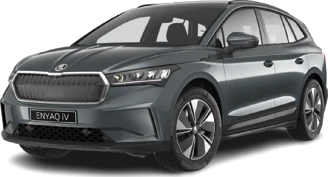
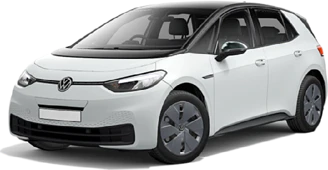
Electric cars on NewMobile.com? But an EV isn’t a phone, is it! Well, ‘car’ stands for ‘automobile’. And on NewMobile.com, we limit ourselves solely to EVs. They also have a battery and a display screen. So they’re practically smartphones on wheels.
Electric car brands
The number of brands with one or more electric cars in their range can (thankfully) no longer be counted on the fingers of one hand. Virtually every self-respecting brand has one or is working on one. Some popular electric car brands are:
EV history
Electric cars are older than most people realise. Some of the very first cars already had an electric powertrain. They usually used a lead-acid battery for this, as it was easy and inexpensive to manufacture. Electric cars were mainly popular in towns and cities where electricity was readily available. Outside urban areas, electric cars were a rare sight. Eventually, fossil-fuelled internal combustion engines came to dominate the market due to their lower costs and longer range. From 1915 onwards, fully electric cars virtually disappeared from the market.
It was only after the oil crisis of the 1970s and the realisation that CO₂ emissions contribute to global warming that interest in the electric powertrain began to grow again. By then, numerous new technologies had also become available, including lithium batteries. Toyota capitalised on this trend by introducing the Prius in 1997; a car featuring both an internal combustion engine and an electric motor. This hybrid powertrain significantly reduced fuel consumption. The Prius was therefore not fully electric.
The GM EV1, introduced the year before, was fully electric, but ultimately only a thousand were sold. In that respect, the Tesla Roadster, introduced in 2008, fared better, although no more than 2,500 units of that model were sold either. Nevertheless, this proved to be the starting point for the enormous growth that electric cars were to experience. This was partly due to other manufacturers launching their own models, such as Nissan with the Leaf, Renault with the Zoe and BMW with the i3. Not to mention the sales success of the Tesla Model 3.
How an electric car works
An electric car is powered by one or more electric motors. The energy required for this comes from a battery. By choosing to charge using renewable electricity generated by solar panels or wind turbines, it is possible to drive emission-free. Of course, emissions are produced during the manufacturing of an electric car.
Types
There are various types of electric cars, ranging from fully electric cars to partially electric or not electric at all. The most common types are:
- BEV / FEV – Battery / Full Electric Vehicle (100% electric)
- PHEV – Plug-in Hybrid Electric Vehicle (petrol car with a plug)
- BAHV - Battery-Assisted Hybrid Vehicle (Mild Hybrid, petrol car without a plug)
- FCEV – Fuel Cell Electric Vehicle (hydrogen car)
- ICE – Internal Combustion Engine (car running on petrol, diesel or LPG)
Different types of battery
Most electric cars have a lithium-ion battery. This type of battery consists of a cathode (+), an anode (-) and a liquid electrolyte through which ions can move. The advantages of Li-ion are its high energy density, low weight and long service life. The disadvantage is that cobalt is required for production, and its extraction is not environmentally friendly and is associated with human rights abuses.
The search is therefore on for new types of battery. Lithium iron phosphate (LiFePO₄ or LFP) in particular is emerging as a strong contender to succeed Li-ion. This type does not use cobalt. Solid-state technology is also a promising development but has not yet proven itself.
Charging
An empty battery needs to be charged. The most logical place to do this is at home. This can be done using a standard 230V socket and a ‘Granny’ charger (Mode 2). However, this isn’t very quick. A charging point offers a solution. These can handle higher power outputs and have a suitable plug. The type of plug you need depends on your car.
You can charge whilst on the move at a public charging point or a fast-charging point. The latter are usually found alongside the motorway. This type typically uses direct current, is capable of delivering even more power and can therefore charge a battery more quickly. In the Netherlands, there are several providers of fast-charging stations, including Fastned. Some manufacturers have their own network of fast chargers, of which Tesla’s Supercharger is the best known.
The type of plug used to charge your car varies from brand to brand, but the most common are:
- CCS – Combined Charging System
- CHAdeMO
- Tesla plug
- Type 1 (Yazaki)
- Type 2 (Mennekes)
