Compare 5G phones
5G phones are now the norm rather than the exception: above the entry-level segment, 5G is included in virtually every new handset. So the question isn’t whether you’ll get it, but what benefits it offers and which 5G bands you should look out for. We don’t earn any more from one brand or handset than from another, so the order in which they appear says nothing about our preference. Use the filters to narrow down the list to what you’re looking for.





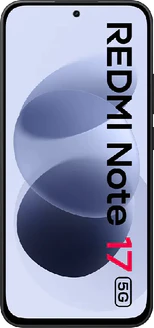
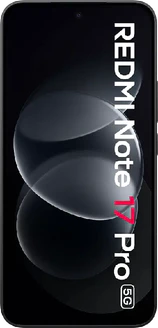
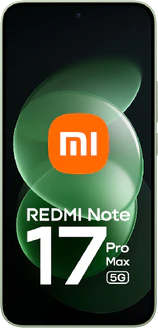
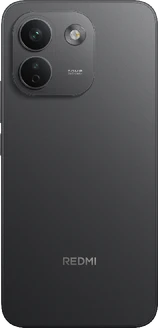

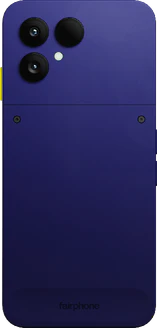
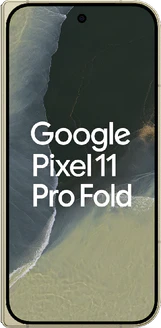
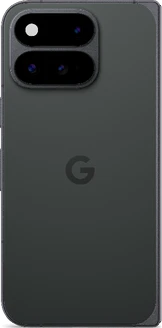
Do you need a 5G phone?
For most people, this is no longer a choice, but a given: the 5G modem is built into the chip of virtually every new phone. The choice that really matters is whether the device supports the band that provides high speeds in the Netherlands.
How do 5G phones really differ?
The options listed above differ in these respects.
- Supported bands: the 3.5 GHz band (n78) provides the speed in the Netherlands, whilst the 700 MHz band (n28) provides the coverage. A handset that lacks n78 will still have 5G, but not the high-speed part.
- 4G-only counterparts: in the entry-level segment, there are many models available in both 4G and 5G versions with almost identical names. If the 5G version does not support n78, it offers little more than its 4G twin.
- Number of bands: the number of 5G bands a device supports determines whether you’ll have 5G coverage outside the Netherlands.
- Battery life: 5G places greater demands on the battery than 4G, so for a device you use on 5G all day, battery capacity is a more important factor.
Every device in this overview supports 5G, and each device automatically falls back to 4G where 5G is unavailable. Your choice therefore comes down to the bands and the rest of the device’s features, not whether it supports 5G.
Make sure you check the 3.5 GHz band if you want to get the highest speeds from your 5G subscription.
Opt for 4G if you mainly make calls and use messaging apps and are price-conscious; see the 4G phones.
Keep an eye on the battery if you stream a lot whilst on the move or share a hotspot.
What are the benefits of 5G in the Netherlands?
Since July 2024, a great deal more than before. The 3.5 GHz band, occupied for years by the satellite station in Burum, was auctioned on 1 July 2024; KPN, Odido and VodafoneZiggo were each allocated 100 MHz. Odido and KPN activated that band within two weeks, starting with the busiest locations and then rolling it out in phases.
In practice, 5G speeds in the Netherlands typically range from a few tens to a few hundreds of megabits per second. On a 3.5 GHz mast with low traffic, speeds can exceed 500 Mbit/s and sometimes approach 1 Gbit/s. The 20 Gbit/s figure often cited in connection with 5G is a requirement from the ITU specification for peak capacity, whereby all radio capacity is allocated to a single connection; no user achieves that speed in practice.
Look at the band, not the logo
The 5G logo in the status bar says nothing about the speed. 5G on 700 MHz has a long range and penetrates buildings well, but is barely any faster than good 4G. 5G on 3.5 GHz is noticeably faster, but has a shorter range, meaning coverage varies from place to place.
| Band | Frequency | Usage |
|---|---|---|
| n28 | 700 MHz | Coverage: indoors and outside urban areas |
| n78 | 3.5 GHz | Speed: capacity in busy areas |
How to check if a device supports n78
You can find this in the specifications. Look for the list of supported 5G bands and check if n78 is included. Pay attention to the full model name, as the same device often comes in regional variants with different band sets. And if you buy a device outside the European market – for example, via import – the band set may differ from what you need in the Netherlands.
Which 5G terms you can ignore
A few terms that crop up frequently but don’t affect your choice. Dutch consumer networks run on 5G non-standalone, where the 5G radio is connected to a 4G core network. Only with standalone 5G will network slicing and making calls entirely over 5G be possible, and standalone 5G is not yet in use here for consumers. 5G-Advanced, the further development set out in the standard for 2024, is not a new generation and does not require a new handset.
The same applies to mmWave, 5G operating at frequencies above 24 GHz, which is talked about more in the United States and Japan than here. The 26 GHz band has not been allocated in the Netherlands, and no decision has been made as to whether it will be auctioned nationwide. Furthermore, a single mmWave transmitter only covers a few hundred metres, which requires a very dense and expensive network, and most handsets outside the United States do not even support it. Even in countries that do have mmWave, only a small proportion of connections utilise this technology.
Many people also raise health concerns. No link to adverse health effects has been demonstrated for the frequencies used by 2G to 5G and Wi-Fi in the Netherlands. This is the conclusion of the Health Council of the Netherlands, which does not entirely rule out risks and therefore recommends ongoing research and the maintenance of exposure limits; the Electromagnetic Fields Knowledge Platform summarises that advice.
What are your alternatives?
4G, which is a solid foundation in the Netherlands. The older networks are phasing out: Vodafone switched off 3G in 2020 and KPN in 2022, meaning 3G is now only still available on Odido’s network, whilst 2G is mainly used by alarm systems, cash machines and cars. For your choice, this means only one thing: a new handset in the Netherlands will not be without a network, whereas a very old one might be.
Are there still new phones without 5G?
Yes, in the entry-level segment and amongst basic handsets. Manufacturers deliberately release 4G-only models in this segment, often alongside a 5G version with almost the same name, where only the addition of ‘4G’ or ‘5G’ indicates the difference. So, when buying a cheap handset, check the full model name and, if necessary, consult the list of 4G phones.
