Compare Amazfit smartwatches
Amazfit publishes an end date for security updates for each model. For seven models in this overview, that date has already passed, and support has officially ended for one model. Below, you can compare all the models, from the entry-level range to the outdoor range.
What Amazfit publishes regarding support
Zepp Health, the company behind Amazfit, generally provides security updates for at least two years after a model’s initial release. For some models, this may extend to three years or more. In the event of a very serious vulnerability, the company may also release a fix after this period.
The number of years in itself is not very meaningful. What stands out is what Amazfit also publishes: a specific end date for each model, and an official list of models for which support has ended. Not a number of years for you to work out yourself, but a month and a year.
| Model | Security updates until |
|---|---|
| Bip 3 Pro | June 2024 |
| GTR Mini | March 2025 |
| Cheetah (Round) | June 2025 |
| Cheetah Pro | June 2025 |
| Bip 5 | July 2025 |
| Active | September 2025 |
| Balance | September 2025 |
| GTS | discontinued, listed on the official EOL list |
You can see the current prices in the overview above. There is no ranking in euros, as this table does not include all models from the overview.
In the case of the GTS, the situation goes a step further than simply an expired date. For models on that EOL list, the company no longer responds to reports of vulnerabilities either.
Six even older models do not appear on that page at all. These are the Bip Lite, the GTR 42mm, the GTR 47mm, the Nexo, the Pace and the Stratos. These predate the policy itself. No end date has yet been set for the Bip Max and the Bip 6.
In practical terms, the significance of such a date is more limited than it sounds. The end date only applies to security updates; the watch will not stop working on that date. What will stop is the patching of vulnerabilities in the watch’s software itself.
That does not render an older model unusable. If you’re mainly looking for a step counter with notifications, an expired end-of-support date is a consideration rather than a ban. If the watch measures your heart rate and sleep and is continuously connected to your phone, then that date carries greater weight. What remains are known vulnerabilities in a device that collects health data.
The system version is separate from the expiry date
Zepp Health publishes its own list of models that support Zepp OS 5. According to its own FAQ, the Balance 2 supports Zepp OS 6. For the Balance 3, the specifications page does not mention a system version, and that model is not on the Zepp OS 5 list either. Security updates and the system version are therefore two separate issues.
Amazfit’s five watch ranges
Zepp Health describes these ranges itself. These are the official descriptions, in brief.
- Bip: the entry-level range, for everyday use with the key health and fitness features. Here: Bip Lite, Bip 3 Pro, Bip 5, Bip Max and Bip 6.
- Active: everyday fitness watches with coaching and recovery insights. These include: Active, Active 2 (round and square), Active 3 Premium and Active Max.
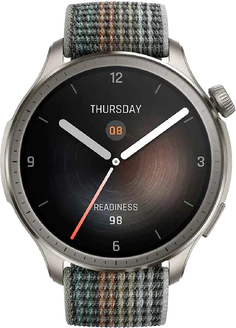
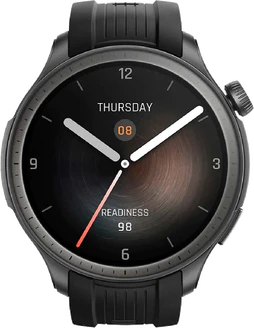
- Balance: the premium range, designed to strike a balance between performance, wellbeing and style. Here: Balance, Balance 2 and Balance 3.
- Cheetah: running watches, with an emphasis on accurate GPS and training features. Here: Cheetah (Round), Cheetah Pro, Cheetah 2 Pro and Cheetah 2 Ultra.
- T-Rex: the rugged outdoor range, featuring navigation and a battery life lasting weeks. Here: T-Rex 3, T-Rex 3 Pro in 44 and 48mm, and T-Rex Ultra 2.
The GTR models, the GTS, the Nexo, the Pace and the Stratos fall outside these five. They are no longer listed in the official Amazfit online shop and are no longer part of an active range. There is also a sixth range, Helio, but these are not watches. On its European shop, Amazfit also groups the same watches by intended use, so you may come across different category names there.
Availability in the Netherlands
There is no Dutch Amazfit website and no Dutch Amazfit online shop. The Netherlands is not listed in the brand’s official country selector.
However, the brand does officially deliver to the Netherlands via its own European online shop. The delivery policy specifically mentions the Netherlands and does not charge any delivery fees for standard delivery. That shop is in English and displays prices in British pounds.
The current generation is available there, ranging from the Balance 3 to the T-Rex Ultra 2. For Dutch prices and Dutch terms and conditions, please refer to the retailers listed in the overview above.
Look up your model in the table above before making your choice: the end date is provided by the manufacturer itself and is not an estimate on our part.
Then choose a range: Bip for simplicity, Active for fitness, Balance for all-round use, Cheetah for running and T-Rex for outdoor use.
System, phone and health features
The current Amazfit watches run Zepp OS, the brand’s own operating system. There is no Wear OS and no Google Play on the watch; apps are sourced from the Zepp App Store. For the oldest models in this overview, the brand does not specify an operating system.
They work with Android and with an iPhone via the Zepp app. The minimum required version varies by model: the Balance 2 requires Android 7.0 or iOS 15.0, whilst the Balance 3 requires Android 8.0 or iOS 17.0. You should therefore check these requirements for the specific model rather than the brand. A Google account is not required.
Amazfit is remarkably transparent about battery life. For the Balance 2, the brand quotes 21 days under typical use and 10 days under heavy use. The test conditions are specified: the heart rate measurement interval, and 90 minutes of GPS use per week compared to 30 minutes per day. This makes the claim verifiable.
Amazfit itself states that the watch and the Zepp app are not medical devices and are not suitable for diagnosing a medical condition. Two points are worth noting in this regard. Some of the measurements are disabled by default: you’ll need to enable continuous heart rate monitoring and the 24-hour stress tracking yourself. Amazfit does not mention ECG, blood pressure or body composition on the specification pages for the Balance 2 and Balance 3, so don’t count on those features.
One warning comes from the brand itself and is easy to overlook. The watch’s radio waves may interfere with an implanted medical device or a hearing aid, such as a pacemaker.
Who is behind Amazfit?
Zepp Health is a publicly listed company and was known as Huami until February 2021. For many years, that company designed Xiaomi’s wearables and had them manufactured.
According to its own 2017 annual report, nearly 79 per cent of its turnover at that time came from that contract. Xiaomi held 14.9 per cent of the shares at the time. At the time of the name change in 2021, this still accounted for 23 per cent of global sales in this category.
The Amazfit brand has been in existence since September 2015.
