Samsung Galaxy Z Fold 8, Ultra, and Flip 8: Naming Trick Masks Higher Price
Three sizes, something for everyone
Samsung unveiled its latest generation of foldables at Galaxy Unpacked. This year, a new, wider size has been added. The Fold 8 is joined by the Fold 8 Ultra, the true design successor to the Fold 7. Then, of course, there’s the Flip 8. And what about that new naming scheme? It’s less innocent than it seems. More on that later.
The most striking of the trio is the Galaxy Z Fold 8. That name is immediately interesting because it features a completely different design than the Fold 7. It’s as if Samsung is saying that this is now the standard Fold. The wider 16:10 cover screen is ideal for viewing Instagram content, which is naturally a bit squarer.
When unfolded, it creates a wider 4:3 screen, which is more comfortable for watching videos. This is where the device differs from its predecessor, which had a slightly squarer 4:3.6 aspect ratio. By now offering both designs, Samsung hopes to get more customers excited about foldables and to stay ahead of Apple, which, according to rumors, will release a foldable with a similar design this fall.
Fold 8: One less camera for lower price
The Samsung Galaxy Z Fold 8 comes with one less camera on the back. Samsung has removed the telephoto camera, which allows for optical zoom. Zooming is still possible by digitally zooming in 2x using the main camera. Samsung promises the same quality as optical zoom thanks to the Adaptive Pixel sensor.
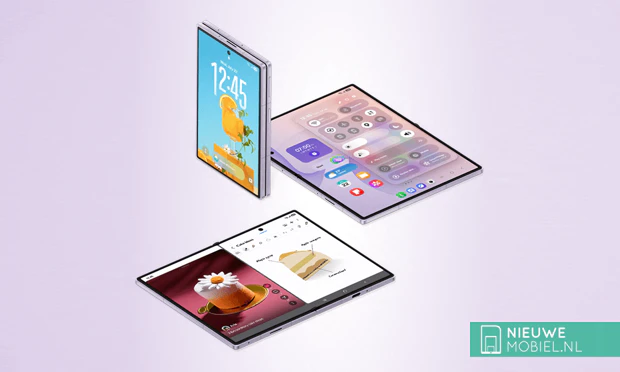
On the back, alongside the 50MP main camera, there’s also a 50MP ultra-wide-angle camera and a single LED flash. Inside the main display, you’ll find a 10MP selfie camera in a punch-hole—so it’s not hidden behind the screen—and there’s also a 10MP selfie camera on the outside. The device is powered by a Snapdragon 8 Elite Gen 5, and the 4800 mAh battery is large enough to play video for 26 hours, according to Samsung.
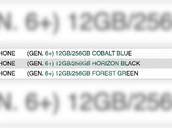
Expect the Samsung Galaxy Z Fold 8 in the colors Lavender (purple), Cream (white), Graphite (black/gray), and Pistachio (green). Samsung will sell the latter color exclusively on its own website. Prices start at €1,999.
Fold 8 Ultra
However, if you’re looking for the spiritual successor to the Fold 7, you’ll want to check out the Fold 8 Ultra. This model features the familiar book-style aspect ratio, with a narrow screen when folded and a square canvas when unfolded. Ideal for those who want to be productive above all else.
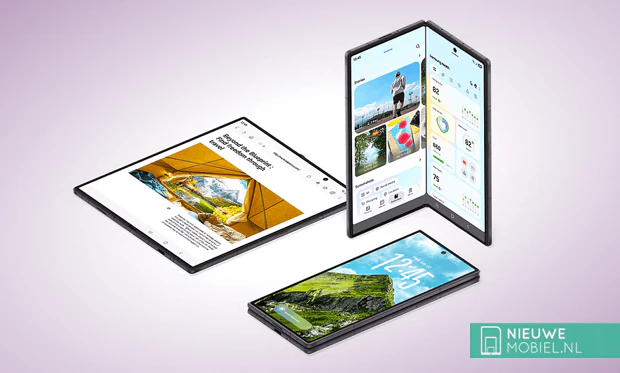
The “Ultra” designation is somewhat misleading, as the differences are upgrades we’ve seen every year. For example, the device has a flatter screen when unfolded thanks to a titanium substrate. At 4.1 millimeters when unfolded and weighing 215 grams, this is also the thinnest Fold to date. The battery capacity has been increased to 5,000 mAh, it now supports 45W charging, and the ultra-wide-angle camera has been upgraded from 12 to 50 MP.
Both new Folds are also switching to a silicon-carbon battery for the first time. This is a positive development, though the capacity remains modest compared to competitors who are now packing 7,000 mAh into their foldables. Pen support is still missing, and there’s no telephoto lens with a zoom beyond 3x.
Expect the same color options here: purple (Violet Shadow), white (Cream), and black (Graphite), with Samsung exclusively selling the green (Green Shadow) variant.
Flip 8
And, of course, there’s yet another new clamshell foldable in the form of the Flip 8. A look at the specs reveals that Samsung has clearly run out of inspiration. Not only does the device closely resemble the Flip 7, but the specs are also virtually identical.
To be fair: at 6.1 millimeters and 180 grams, this is the thinnest and lightest Flip ever, though the difference compared to the Flip 7 (6.5 millimeters, 188 grams) is minimal. The biggest difference is the processor. Samsung is now using an Exynos 2600, which we previously saw in the Galaxy S26.
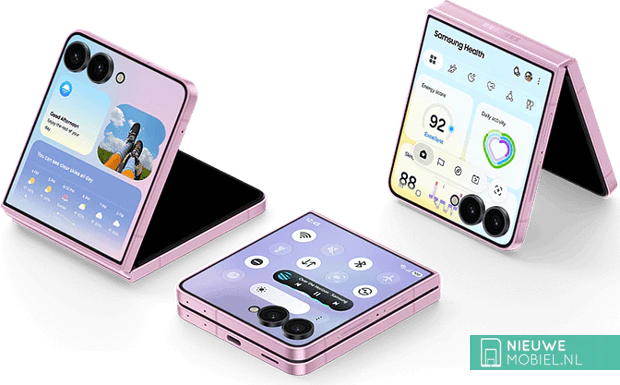
Other features remain unchanged, including the 6.9- and 4.1-inch screen sizes, the 50+12MP camera setup, and the 4300 mAh battery. However, some new colors are being released, including Pink. The most noticeable difference is in the prices. For this minimal effort, Samsung is charging no less than €1,299 for the 256GB model (€100 more than last year) and €1,499 for the 512GB model (€180 more than last year).
Psychological price increases
The elephant in the room: the higher starting prices, which Samsung has cleverly worked into its strategy. By making the Fold 8 slightly simpler than the Fold 7 at the time, the price drops below the psychological 2,000-euro threshold. However, prices for additional storage rise quickly, reaching €2,199 for the 512GB model and even €2,599 for 1TB of storage.
By giving the true successor to the Fold 7 the name “Ultra,” Samsung hopes you’ll feel more willing to pay more for it. Prices are increasing by €100 for the entry-level model with 256GB of storage and by €280 for the 1TB version.
All of this is due to the shortage of memory chips caused by the AI boom. Ironically, it is Samsung itself that is benefiting greatly from this rising demand for such chips, since Samsung manufactures them in-house. According to preliminary figures, operating profit for the second quarter was roughly 19 times higher than a year earlier. Unfortunately, Samsung isn’t using that extra profit to keep prices steady; instead, it mainly benefits shareholders.
All three devices are available for preorder starting today, July 22. As a consolation, buyers of the new Z series will receive six months of Google AI Pro for free, including 5TB of cloud storage (valued at €21.99 per month). It’s a nice bonus, though a temporary subscription obviously doesn’t compensate for a permanent price increase.