Complete redesign coming to One UI 10, possibly with paid AI subscription
Samsung appears to have big plans for the tenth version of its One UI interface, which is found on Galaxy phones. According to various sources, major changes are on the way, including the possibility of charging for more advanced AI features.
Samsung Galaxy phones run on Google's Android operating system, but the layer on top—the interface—is called One UI. For version 10, it doesn’t seem to be just a fresh coat of paint or extra (AI) features, but rather a complete redesign of how you operate your phone. Starting with how you interact with apps.
From separate apps to a single contextual view
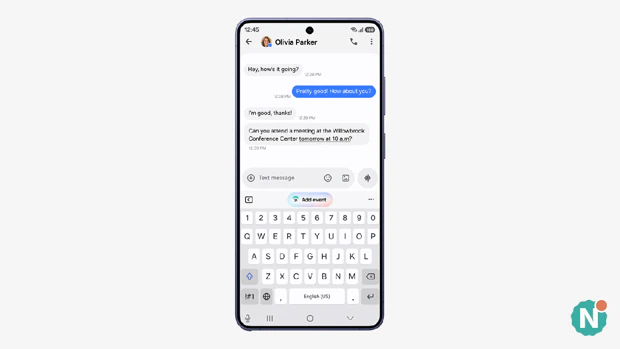
Samsung wants to move away from what the source calls App Silos: each app as its own island that you have to operate separately. Instead, One UI 10 would combine information from your calendar, your location, and your messages into a single contextual view, called Contextual Flow. The source doesn’t specify exactly what this will look like, but something like a single portal that operates your apps for you, powered by AI, seems likely. Its main purpose is to ensure you don’t get lost in endless or hidden menus when you want to adjust something simple.
Both Nokia Power User and Ice Universe are reporting on the upcoming changes in One UI 10. Another area that should improve with version 10 is the ability to seamlessly switch from a phone to a tablet or smartwatch to perform your tasks. The device you’re using should be independent of the task you want to perform.
Free base, paid AI features
Less encouraging is what that same source reports about the revenue model. One UI 10 is said to adopt a two-tier model: the base remains free, but computationally intensive AI features and integrations with third-party services would be behind a subscription. PhoneFuturist also mentions the possibility of paid third-party services. This isn’t entirely out of the blue. When Galaxy AI was introduced, Samsung promised that the features would be free thru the end of 2025. That promise has since been quietly revised: the basic features remain free, but new and more advanced AI features may become paid. A subscription hasn’t been announced yet, but anyone buying a Galaxy now because of the AI features should keep in mind that the most interesting new features will eventually cost money.
When is One UI 10 coming, and will it still be called that?
PhoneFuturist also believes Samsung is seising this moment for a name change. One UI would be renamed Galaxy OS, though this is by no means certain and, in theory, it could also be an entirely different project.
That leaves two questions. First, when will One UI 10 be released? Samsung has been working on the rollout of One UI 9 for quite some time, and it was even delayed for the S26 series; the rollout there didn’t begin until late September. So it remains to be seen whether One UI 10 (or Galaxy OS) is expected with the Galaxy Z Fold 9 or if it won’t be an issue until the S28.
The second question is more technical. A new way of app interaction may require work from developers. If they don’t incorporate that functionality, those apps won’t work in the new way, and you’ll still have to switch from app to app and dive into menus. How Samsung plans to solve this is still unknown, but it’s easy to imagine that the success of One UI 10/Galaxy OS hinges on third-party app support.