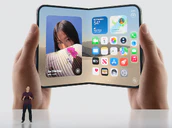
5 Things Apple Didn't Tell You About the iPhone Duo
Apple unveiled the iPhone Duo for the first time at exactly 7:55 p.m., and the discussion ended by 8:16 p.m. Those 21 minutes were long, as every aspect of Apple’s first foldable was discussed in detail. But apparently, that wasn’t enough. Here are five things Apple didn’t tell you about the iPhone Duo.

With a 5.4-inch screen on the outside and a 7.6-inch screen on the inside, it is both Apple’s largest and thinnest iPhone to date. Despite the powerful A20 Pro chip and the split battery, Apple claims it will last a full day. That pleasure will cost you at least €2,339 and it will be available starting October 23. That much is clear, but there are also some unknowns—things Apple kept quiet about but we managed to uncover.
1. Hefty weight: 254 grammes
First and foremost is the weight. At 254 grammes, it is definitely on the heavy side. It is also noticeably heavier than competitors like the Galaxy Z Fold 8, which weighs 201 grammes, and the Xiaomi 18 Fold, which weighs 219 grammes. It is even a fraction heavier than that other heavyweight foldable, the Pixel 11 Pro Fold, which weighs 239 grammes.
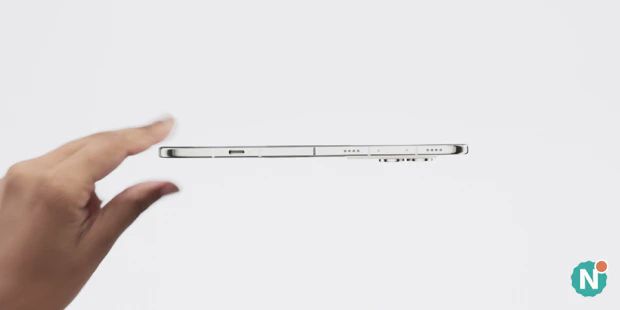
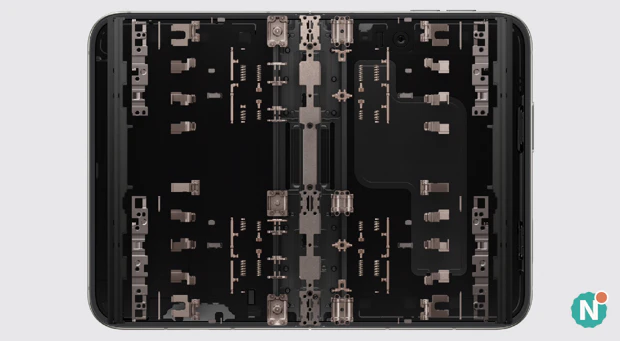
Exactly where the extra weight of the iPhone Duo comes from will become clear after the first teardown videos, but it may have to do with the extensive use of titanium. The fact is that you can feel this weight during every-day use. That has drawbacks, such as a jacket pocket pulling a bit more, but also advantages, such as a more robust and premium feel.
2. Volume buttons on top
We only noticed this after studying the press photos, but Apple is not placing the volume buttons on the side this time. To the right of the iPhone Duo, you will find only the power button—which incorporates Touch ID—and a camera control button. The volume buttons are located on the top right.
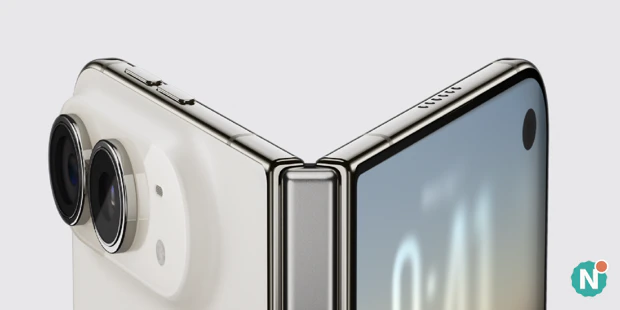
While that might be fairly unusual for a phone, it is not for a tablet. Why is that? After opening, the top of the iPhone Duo becomes the side. Without rotating the device, it switches from portrait to landscape mode, and the volume buttons are positioned just right. An added benefit: by keeping them away from the power button, you will never press the wrong one.
3. Unknown resolution of the selfie camera inside
Early in the presentation, something caught our eye: there did not seem to be a selfie camera visible on the inner screen. Until it suddenly appeared halfway thru the video. Turns out, Apple hides it under the screen. We had seen these Under Display Cameras before in the Galaxy Z Fold series, but Samsung abandoned the feature. The camera’s image quality was subpar.

So what about the iPhone Duo? To be honest, we do not know. Apple has been tight-lipped about the specs for that selfie camera, except to say it has an f/1.8 aperture and can record video in FHD. We do not know how many megapixels it has, and no sample photos were shown.
Our suspicion that the image quality is not great has not been disproved yet. The question is also how bad it is—you can still take great photos with the main camera by folding the screen or using the outer screen as a viewfinder.
4. Matte screen on the inside
During the presentation, Apple devoted a lot of attention to the inner foldable screen. Foldables have been around for many years, and the only reason Apple is introducing one now is that it did not think the technology was mature enough before. So what has changed?
Apple was looking for a screen that does not look or feel like plastic and believes it has found the solution in a screen with a nano-texture finish. We are familiar with this from Apple displays, which suffer less from reflections as a result. And that also applies to the iPhone Duo. It is not as reflective as other foldables and has a very matte appearance. As a result, colours appear slightly less vibrant and a bit grainier.
5. Temporarily water-resistant
On paper, the iPhone Duo has one major advantage over Samsung’s competition: IP68 water resistance. For a foldable, that is exceptionally high, but not unique. Google also launched the Pixel 11 Pro Fold with similarly high protection against dust and water.
IP68 provides protection up to 6 metres deep for 30 minutes. But anyone who reads the fine print will notice something remarkable: this IP rating is temporary: “Splash, water, and dust resistance may decrease over time due to normal wear and tear.”
Now, that sentence appears in the fine print for every iPhone, but with the Duo, it carries more weight. A regular iPhone is a sealed unit; the Duo has a hinge that you open and close dozens of times a day. It is precisely those moving parts that wear out, causing protection against dirt and water to diminish faster than on the iPhone 18 Pro next to it. Moreover, water damage is not covered by Apple’s warranty. Still, it is a shame for a phone that cost you over two thousand euros if it is ruined by a single drop of water getting inside.
Mentioned, but easy to miss
Finally, here are three things Apple did mention during the keynote, but so briefly that you could easily overlook them. Still, you will want to know them before making a decision.
- No telephoto lens
The “4x optical zoom” comes from a crop of the 48-megapixel main sensor. A true telephoto lens, like the ones found on the Galaxy Z Fold 8 and the Pixel 11 Pro Fold, is missing. So if you like to zoom in, you will have to compromise—even for €2,339.
- eSIM only
There is no SIM card slot in the iPhone Duo. In the Netherlands, all major carriers support eSIM, but be sure to cheque if you are with a smaller provider or are used to using a local SIM card when travelling.
- MagSafe is included
Good news for anyone who already has a drawer full of magnetic chargers and accessories: the Duo charges wirelessly at up to 25 watts via MagSafe and Qi2.
Anyone who, after reading this post, still wants the iPhone Duo—which we completely understand—will have to wait until October 16 to order one. Apple will start shipping the phones on Friday, October 23. Prices start at €2,339 for the version with 256 GB of storage. Available colours are Nite Sky (dark blue) and Star White (white).