Samsung Galaxy S26 FE Has Both Longer and Shorter Battery Life: Here’s Why
The European energy label for the Galaxy S26 FE tells two storeys. While the new Fan Edition lasts significantly longer on a single charge than its predecessor, its battery is certified for nearly half as many charge cycles. We compare the figures side by side.
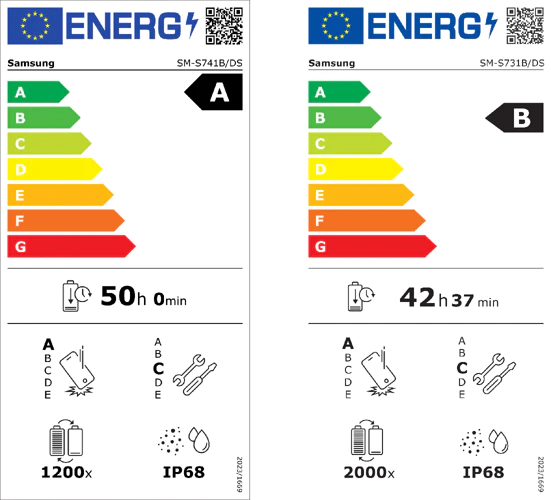
According to the energy label, the Samsung Galaxy S26 FE lasts 50 hours on a single battery charge and has an energy efficiency rating of Class A. Compare that to the Galaxy S25 FE, which is rated at 42 hours and 37 minutes and Class B, and the improvement is striking: 7.5 extra hours, or about 17 percent. And this is despite both devices having exactly the same 4,900 mAh battery that charges at up to 45W.
Thanks to the Exynos 2500
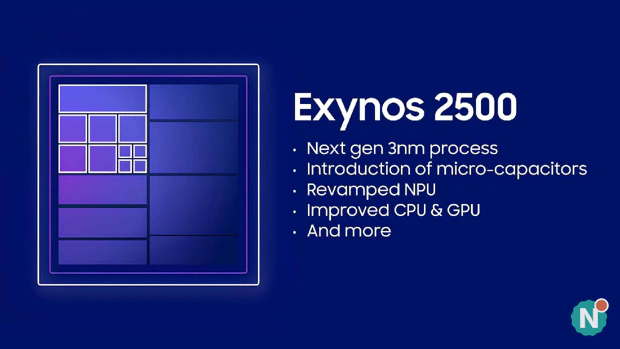
The explanation can really only come from one place. As we already noted in the announcement, the S26 FE is virtually identical to its predecessor; the Exynos 2500 is the main difference.
That chip is manufactured using a more advanced 3nm process than the Exynos 2400 in the S25 FE and therefore handles the same battery more efficiently. Note: Rated figures come from a standardised European testing protocol. This is a promised runtime under test conditions, not a guaranty of your actual usage. However, since both devices were tested according to the same protocol, the comparison between them is quite telling.
From 2,000 to 1,200 charge cycles
That same label also contains some less positive news. The battery of the S26 FE is certified for 1,200 charge cycles before its capacity drops below 80 percent; one cycle represents a single full charge from zero to 100 percent, even if you spread it out over multiple charging sessions. For the S25 FE, the count stands at 2,000 cycles. If you charge it every day, you will reach that limit after just over three years with 1,200 cycles, whereas its predecessor is rated to last over five years on paper.
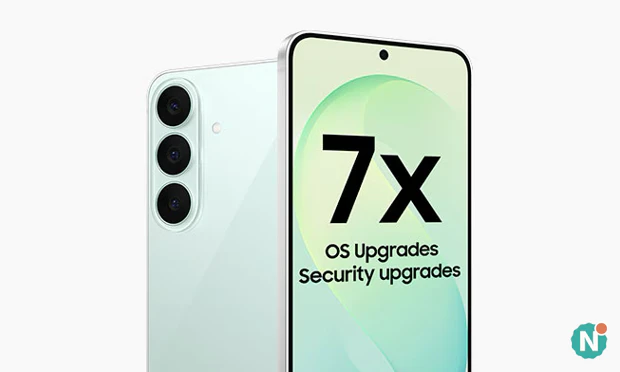
This conflicts with Samsung’s own promise of seven years of updates: the software will outlast the battery it is supposed to run on. Fortunately, wear and tear can be minimised, for example with the battery protection feature in One UI that stops charging at 80 percent. A battery replacement also remains an option; the repairability score is Class C, just like with the S25 FE.
Incidentally, this is not the only quiet step backward: according to Samsung’s own product pages, the USB port has been downgraded from USB 3.2 Gen 1 to the much slower USB 2.0. This cannot be due to the Exynos 2500, because the Galaxy Z Flip 7 with the same chip simply has fast USB.
For those considering the S26 FE, the picture is therefore mixed: a significantly longer promised battery life on a battery that, according to the same label, wears out faster. Moreover, that mixed picture is not exactly cheap: the S26 FE costs €799, while the S25 FE, with its more durable battery, can still be found for around €499. So, if battery life is your top priority, you are surprisingly better off with the previous model. And if you really want to spend around €800 on a new phone, take a look at the Galaxy S26+: with its Exynos 2600, it is significantly more powerful, has better cameras thanks to a 12MP telephoto lens, and is actually slightly cheaper right now.
In any case, there is no need to wait any longer: despite Samsung’s stated launch date of September 4, Belsimpel is already selling the device. In our comparison, you can see all the differences between the two devices at a glance.