Compare 4G phones
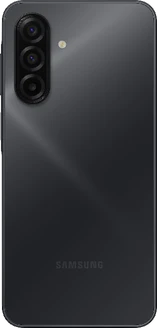
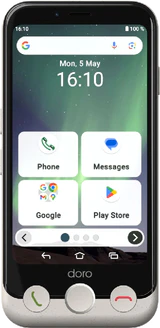
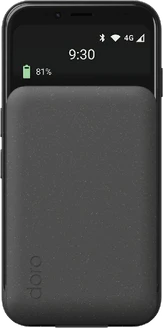
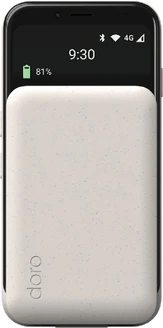
4G phones are no longer the fastest, but they are the standard: 4G is the network that a handset falls back on in the Netherlands and which is also used for making calls these days. Below are the handsets that support 4G. We don’t earn any more from one brand or handset than from another; use the filters to narrow down the list to the type of handset you’re looking for.
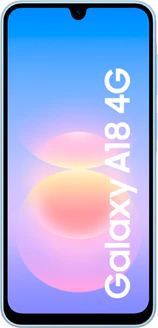
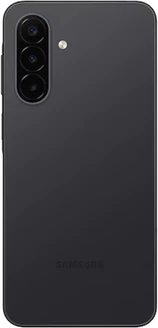
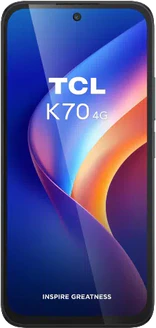
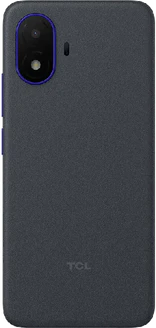
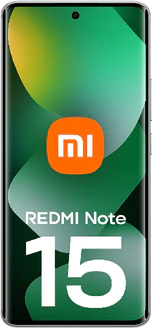
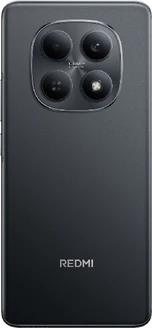
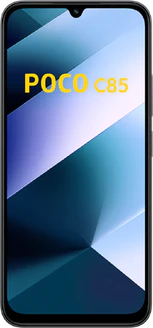
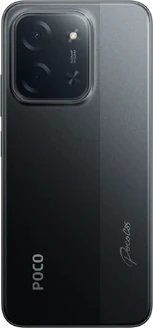
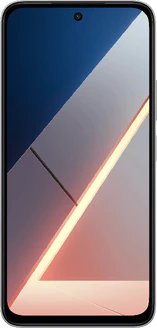
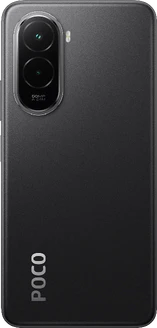
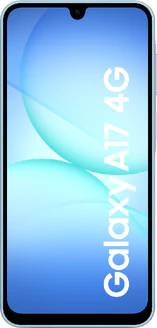
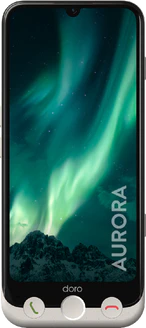
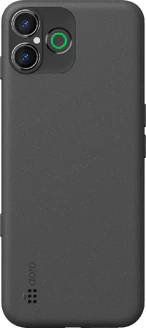
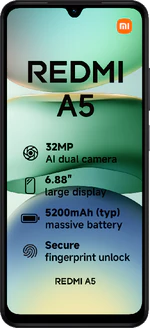
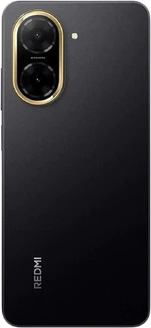
Is 4G enough for you?
For calls, messages, navigation, music and video, 4G is more than enough, and that isn’t going to change any time soon. The question that really matters when buying a new handset is a different one: can it make calls over 4G? The older networks that were previously used for making calls are being phased out, and as a result, 4G has gone from being a speed option to the minimum requirement for your availability.
How do 4G phones really differ?
Four factors make the difference here.
- Making calls via 4G (VoLTE): determines whether a handset can still make calls with a provider that has switched off 2G and 3G.
- Supported bands: a handset does not need to support all 4G bands. Handsets for the European market cover the bands used here; an import model may be missing one.
- LTE category: determines the maximum theoretical speed and whether a device supports 4G+.
- Basic handsets: for flip phones, phones for the elderly and dumbphones, 4G is the standard.
You don’t need to give the technology itself much thought: 4G is available virtually everywhere in the Netherlands and all the handsets listed above support it. What you might be missing, however, is a specific band or the call function, and this is particularly common with handsets not designed for this market.
Bear in mind that making calls via 4G is important if you’re considering an older or basic handset; without this feature, you’ll be difficult or impossible to reach.
Check the frequency bands if you’re buying the handset via import or from a foreign online shop, as a band you need here might be missing.
Also consider 5G if the handset needs to last for years or if you’re often in busy areas; see the 5G phones.
Making calls via 4G: why VoLTE matters
VoLTE matters because the networks that used to handle calls are being phased out, and each provider is doing so at its own pace. Odido stopped offering 2G on 1 June 2023 and is phasing out the Netherlands’ last 3G network. KPN reports that 3G has already been phased out and that 2G will be switched off for customers who no longer need it, with 1 December 2027 as the end date. Vodafone switched off 3G back in 2020. With a provider that offers neither 2G nor 3G, a handset will make calls via 4G or 5G, or it will not be able to make calls at all.
This method of making calls is known as 4G calling, 4G voice or VoLTE. Odido states explicitly, in relation to its own 3G phase-out, that your handset must support it and that the feature must be enabled. Three things are required: your device must be capable of it, your provider must offer it, and it must be enabled in your settings.
How to check this yourself
Look in your device’s network settings for a toggle labelled VoLTE, 4G calling or Calling via 4G. If it’s there, you can switch it on or off. If the toggle is missing, this does not necessarily mean the device does not support VoLTE: on some devices, the provider’s network profile automatically enables calling via 4G. You should therefore check the specifications and contact the manufacturer, as these will state whether VoLTE is supported for each model.
A device that only supports 2G or 3G, or one that supports 4G but not VoLTE, will no longer be able to make calls on a network that doesn’t offer those services. Where 2G is still active, calls will still work, but this is only a temporary solution.
What do the 4G bands mean?
Each band is a section of the frequency spectrum on which a network transmits, with its own number as defined by the standard. A handset does not need to support all these numbers, and manufacturers sometimes only specify the frequency. Use this table to look up which band number corresponds to which frequency. It is a conversion table, not a list of what Dutch providers use.
| Band | Frequency |
|---|---|
| 1 | 2100 MHz |
| 3 | 1800 MHz |
| 7 | 2600 MHz |
| 8 | 900 MHz |
| 20 | 800 MHz |
| 28 | 700 MHz |
| 38 | 2600 MHz |
| 40 | 2300 MHz |
| 42 | 3500 MHz |
Band 7 and band 38 are both in the 2600 MHz range, with band 7 being an even-numbered band and band 38 an odd-numbered band. The bands used by a provider are listed on its own network page.
As a rule of thumb, a low frequency has a long range and penetrates walls well, whilst a high frequency provides greater capacity over short distances. We list the supported bands and the LTE category for each device in the specifications, where we have this information.
LTE categories and 4G+
Not every 4G phone is equally fast, as the standard is divided into categories, each with its own maximum theoretical download speed. The higher the number, the faster the speed: LTE Cat3 reaches 100 Mbit/s, Cat4 150 Mbit/s, Cat6 300 Mbit/s and Cat9 450 Mbit/s.
4G+ is not a separate generation but an extension of 4G: providers bundle multiple frequencies into a single connection, which delivers higher speeds. The marketing name is 4G+, the official term is LTE-Advanced and the technology is called carrier aggregation. You’ll only notice a difference if your provider, subscription and device all support it; LTE Cat6 is usually the minimum requirement for the device.
What you actually notice in practice depends less on that category than on the mobile mast you’re connected to and how busy it is. A high category is an upper limit, not a guarantee.
Is a 4G-only handset still a good choice?
For light use, yes, and there are benefits: 4G-only models have fewer radio modules on board, often use less battery power and are among the cheapest options available. On the other hand, without 5G you’ll miss out on the extra capacity in busy areas, and the rest of the specifications in that segment are generally modest too. If you want the phone to last for years, compare this overview with the 5G phones and the budget phones.
