
Compare compact smartphones
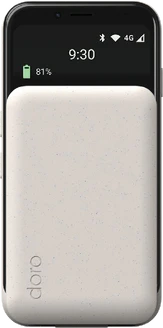
Compact smartphones are a shrinking category, which makes the search more difficult than it needs to be. This overview lists the handsets that can be held with one hand and fit in a trouser pocket, and below you can read about where the line is drawn for a small phone these days. We don’t earn any more from one brand or handset than from another, so the order says nothing about our preference. Filter by screen size or weight and keep only those that really fit in your trouser pocket.



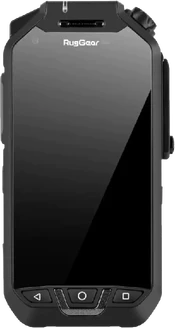
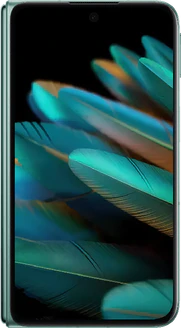

What counts as a compact smartphone these days?
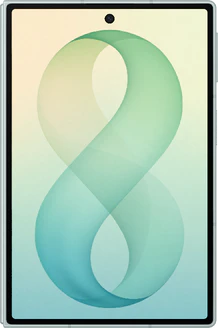
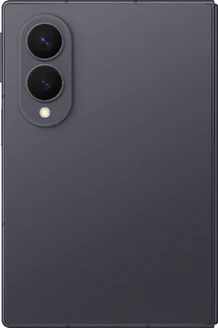
Around 6.3 inches or smaller: that’s where we draw the line in this round-up. That’s a somewhat broad definition, and you’re entitled to be critical of it, because a 6.3-inch device is only small in comparison with the rest of the range. But it is the reality of the market: the smallest flagship models from Apple, Samsung and Google are all around that 6.3-inch mark, and below that, the choice quickly becomes very limited. Weight is just as decisive a factor as screen size, and it is precisely in this respect that the smallest top-of-the-range models vary considerably.
How do compact smartphones really differ?
The range above varies in these respects.
- Screen size versus body size: two devices with the same screen size can differ by several centimetres in height, because the screen bezels and the bezel below the screen are narrower or wider.
- Weight: above 190 grams, you’ll notice the weight if you hold the device for a long time with one hand, regardless of the screen size.
- Price range: the price range determines which lenses and which screen you get, not the size; a smaller device is not automatically a simpler one.
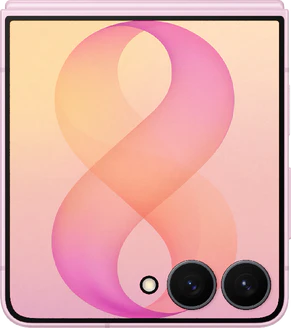
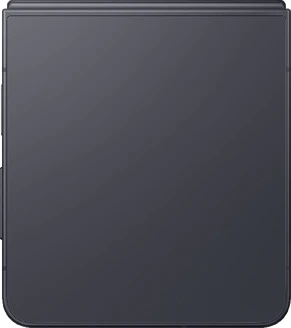
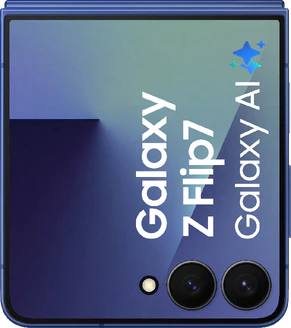
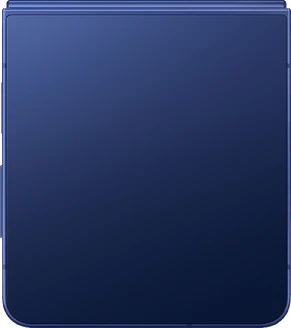
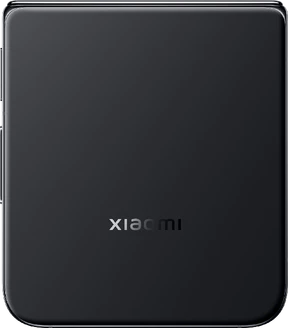
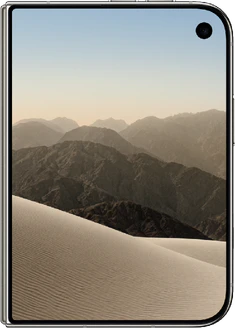
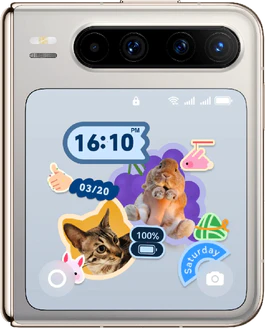
- Flip phone: when folded, a flip phone is the smallest phone available, but when in use it is a large handset.
Whichever option you choose here, the phone can still be held in one hand. So your choice comes down to how much you’re willing to compromise on battery life and, within a particular range, on the camera.
Choose a phone around 6.3 inches if you want a fully-fledged phone that can still be operated with one hand; that’s the smallest size in which the major brands still produce top-of-the-range models.
Choose a flip phone if pocket size is your main priority and you actually prefer the larger screen; you’ll find these amongst the foldable phones.
Go for a larger model if battery life and the camera are more important to you, and switch on one-handed mode; you can find out how that works below.
What a smaller device costs you
Battery life, and sometimes a lens. The size of the casing determines how much battery it can hold, and this is clearly evident within a single series: the smallest model invariably has the smallest battery, even if the cameras are identical to those of the largest model in the series. With Apple, this results in a significant difference in video playback time between the smallest and largest Pro models, and with Samsung and Google, the capacity within the same series increases just as noticeably with the size.
Whether you get a good camera or not doesn’t depend on the size but on the price range. Two devices from the same range with the same screen may have exactly the same cameras, whilst the cheapest model in a range often gets a simpler telephoto lens than the most expensive one. So look at the class rather than the centimetres; the overviews of mid-range smartphones and high-end smartphones will take you straight to the right category.
Technology does, however, mitigate the battery issue. Silicon-carbon batteries deliver noticeably more capacity in the same volume than traditional lithium-ion batteries, and it’s precisely in compact devices that this improvement makes a real difference.
The flip phone as a compact choice
When folded, a clamshell model is smaller than any standard mobile phone: barely bigger than a pack of cards. The downside is just as clear. When folded, the device is about twice as thick as a standard compact phone, and when unfolded, you’re left with a large screen of around seven inches, so one-handed operation is out of the question. It is, therefore, the smallest phone in your pocket, but not the smallest phone in use. Anyone looking for the latter would be better off with a standard handset.
Why the small phone disappeared
Not due to a lack of willingness, but because of sales figures. Apple discontinued the mini after the 2021 model; market researcher CIRP put the latest mini model at three per cent of iPhone sales, half that of its predecessor. Apple did not replace it with something smaller but with a larger model, which shows that it was not the size but the small target audience that was the problem. On the Android side, the situation was the same: Sony discontinued that series after the 2018 Xperia XZ2 Compact, and Asus dropped the compact Zenfone after 2023, announcing in early 2026 that it would no longer be adding any new phone models.
Manufacturers themselves cite two reasons. Their sales figures point towards larger screens, and in a small chassis it is difficult to achieve the right balance between battery life, cameras and performance. That second argument is now open to challenge, however: there are devices measuring around 6.3 inches with top-of-the-range processors, fully-fledged cameras and batteries of around or above 5000 mAh.
Operating a large phone with one hand
If you can’t find a small device, the software can solve part of the problem. These features help with that:
- Reachability (iPhone): slides the top half of the screen down within reach; can be enabled under Accessibility and Touch.
- One-hand mode (Android): available as standard in the system settings since Android 12, and intended for those who navigate using gestures.
- One-Hand Mode (Samsung): reduces the size of the entire screen; Samsung also offers the separate ‘One Hand Operation +’ module with swipe gestures along the screen edges.
And really small phones?
If you want something smaller than 6.3 inches, then second-hand or refurbished is the only option with a Dutch warranty. Smaller models from a couple of generations ago can still be found there, and you’ll know in advance what condition they’re in and how long they’ll continue to receive updates; the latter is definitely something to bear in mind with an older, smaller model.
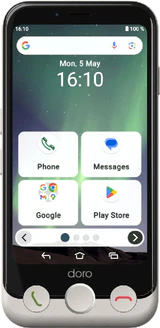
In addition, a handful of niche manufacturers still produce handsets measuring three to five inches, sometimes running a full version of Android. You can buy these via their own online shops or through a second-hand platform, not from a Dutch shop offering a warranty, and updates and network support are something to check in advance. If you’re looking for something small to use alongside your phone, a dumbphone is usually the wiser choice.
