Compare phones with fast charging
Are you looking for a mobile phone with fast charging? Here you’ll find all handsets with a fast-charging function: models that can recharge a significant portion of their battery in a short time, which is handy if you often top up your battery quickly rather than leaving it plugged in overnight. For each device, you’ll see the providers listed side by side, so you can compare them independently based on power output and charging technology. Refine your search using the filters on this page.
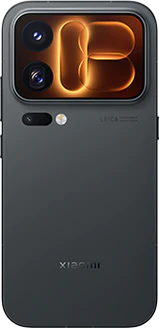
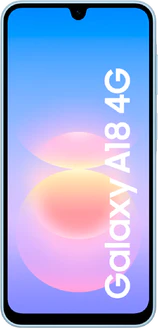
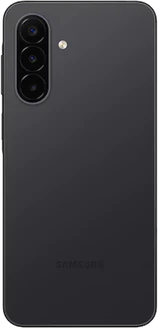



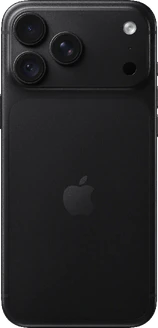




What should you look out for with fast charging?
Fast charging depends on three things working together: the phone, the charger and the cable. If any one of these three does not support high power, charging will revert to a slower speed. What’s more, the charger isn’t always included in the box, and in practice you’ll usually only achieve the highest speed with a charger from the same brand.
How do phones with fast charging really differ?
- Power in watts: this determines how quickly the battery charges, although the benefit per extra watt decreases
- Charging technology: USB Power Delivery is the common standard; in addition, manufacturers have their own technologies that only achieve their maximum speed with their own chargers
- Wireless charging: handy for a quick top-up, but still slower than charging with a cable
- Battery capacity: a large battery takes longer to charge at the same power output, so power and capacity only tell the full story when considered together
You don’t need to compare the connectors. Since the end of December 2024, new phones in the European Union have had a USB-C port. If a device charges at more than 15 watts, it must also be able to do so via USB Power Delivery. This means that any USB-C charger will work with any new phone; only the maximum speed requires a charger and cable suitable for that power rating.
Bear in mind high power output if you often top up your battery for short periods, for example, a quarter of an hour before you head out.
Bear in mind the battery capacity if you want to get through a whole day without needing a power socket; in that case, have a look at phones with long battery life.
Check what’s included in the box if you don’t want to buy a separate charger; otherwise, take a look at the range of chargers straight away.
What does the wattage tell you?
The wattage stated on the packaging is a peak value, not an average. Devices usually maintain that peak power for only a few minutes before scaling back to conserve the battery and keep the temperature under control. As a result, two devices with a significant difference on paper may perform very similarly in practice. For a fair comparison, look at the charging time to 50 per cent and to full capacity, not just the number itself. Above the threshold at which fast charging begins, each step upwards yields a smaller gain, so higher isn’t necessarily better.
What do all those brand names mean?
Manufacturers like to give their charging technology its own name, such as SuperVOOC (Oppo and OnePlus), HyperCharge (Xiaomi), Super Fast Charging (Samsung) and TurboPower (Motorola). Essentially, the phone and charger agree between themselves on the voltage and current at which they’ll operate. If you use a charger from a different brand, the device will simply continue charging using the shared standard, just at a slower rate.
Is fast charging bad for your battery?
No, under normal use you’ll hardly notice any difference. Modern phones reduce the power output as the battery fills up, continuously monitor the temperature and stop automatically once the battery is full. Charging at maximum power does generate more heat than charging at a lower rate, and over a few years this will result in a slight loss of capacity. For the same reason, charging in direct sunlight or under a pillow is not recommended. Many devices also have a setting that limits charging to around 80 to 85 per cent, which preserves the battery’s life in the long term.
