Buy the Apple Watch Series 11
Looking for an Apple Watch Series 11? Here’s a side-by-side comparison of all the models: both case sizes, aluminium and titanium, with or without 5G. The Series 11 is Apple’s all-rounder with a full suite of health sensors; if you’re looking for something more affordable, check out the Apple Watch SE 3, whilst those looking for a more robust watch will find what they’re after in the Ultra series. We compare the current prices across all retailers, 100% independently. Use the filters for case size, material and connectivity to find the right model straight away.
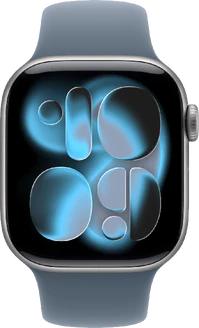
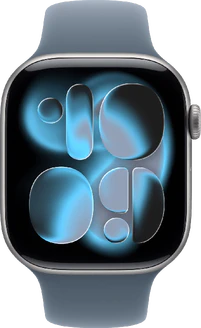
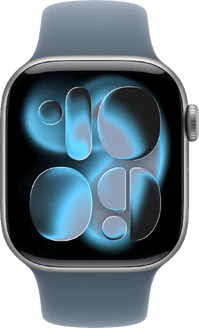
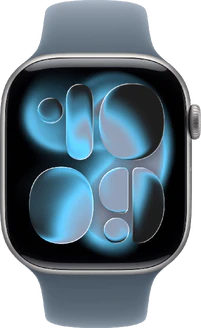
Which Apple Watch Series 11 is right for you?
For most people, the Series 11 is the right model: it features the full range of health sensors, a display that peaks at 2,000 nits and, according to Apple, 24 hours of battery life. On this page, you’re no longer choosing a model, but a variant. That boils down to three decisions: the case size (42mm or 46mm), the material (aluminium or titanium) and the connectivity (GPS only, or 5G as well). You can see the current prices for each variant in the overview above. Would you like to compare the entire range side by side first? You can do so on our page featuring Apple smartwatches.
42mm or 46mm: choose based on your wrist, not your budget
The price difference between the two sizes is small, but the difference in how they feel on your wrist is not. The 46mm case displays more text per screen and is more comfortable when replying to messages on the go or checking your route and heart rate whilst exercising. On a narrow wrist, that same case sticks out and feels heavy whilst you’re sleeping, even though tracking your sleep is one of the very reasons for keeping this watch on at night. If you’re unsure, measure your wrist circumference and compare it with the watch you’re currently wearing. That tells you more than a list of specifications.
Aluminium or titanium
Aluminium is the lightest and cheapest option and is perfectly fine for everyday use. Titanium is more expensive and heavier, but is less prone to scratches and looks smarter with a suit. Functionally, there’s no advantage: the sensors, screen and battery life are the same. If you’re looking for a watch that can really withstand rough handling, then the Apple Watch Ultra series is a more sensible way to spend that extra money.
GPS or 5G: only useful if you don’t have your phone with you
The 5G version (called ‘Cellular’ by Apple) comes at an extra cost and also requires a separate eSIM subscription from your mobile provider. This is worth it if you want to go for a run, a cycle or a swim without your iPhone but still want to stay reachable. If your phone stays in your pocket or bag anyway, you’ll be paying a monthly fee for something you don’t use. You can recognise the Cellular models by the coloured ring on the Digital Crown.
What you get in addition to the SE 3
The difference compared to the entry-level model isn’t in speed: both watches use the same S10 chip. It’s in the display, the battery and the medical sensors.
- ECG and blood oxygen: the Series 11 has an ECG app, an electrical heart sensor and blood oxygen monitoring. The SE 3 does not have these.
- High blood pressure alerts: the Series 11 can detect patterns that indicate high blood pressure. This is an alert function, not a diagnosis, and is not a substitute for a blood pressure monitor.
- Brighter screen: up to 2,000 nits peak brightness, whilst the SE 3 remains at around half that. You’ll notice the difference in bright sunlight.
- Longer battery life: 24 hours compared to 18 hours on the SE 3, and up to 38 hours in power-saving mode.
- More choice: four aluminium colours plus three titanium finishes, compared to two aluminium colours on the SE 3.
The honest downside: it needs to be plugged in every day
24 hours sounds like a full day, but in practice it means charging it every day. If you also wear the watch at night to track your sleep, you’ll need to set aside a fixed time for charging, for example whilst showering or having dinner. Fast charging makes this a bit easier (according to Apple, 80 per cent in under an hour), but it remains a daily chore. If you want a watch that can last for days or even weeks without a charger, you’re better off with Garmin. In return, you’ll have to do without the range of Apple apps and seamless iPhone integration.
One more thing to bear in mind: an Apple Watch only works with an iPhone. If you switch to Android later on, you won’t be able to take the watch with you. In that case, you should first compare the Samsung Galaxy watches.
Choose the Series 11 if you want the health sensors (ECG, blood oxygen, high blood pressure alerts) and a bright screen is important to you.
Choose the SE 3 if you mainly use notifications, activity tracking and Apple Pay, and the price difference is a bigger factor.
Choose the Ultra if your watch needs to withstand rough handling and you want to go longer than a day without charging.
