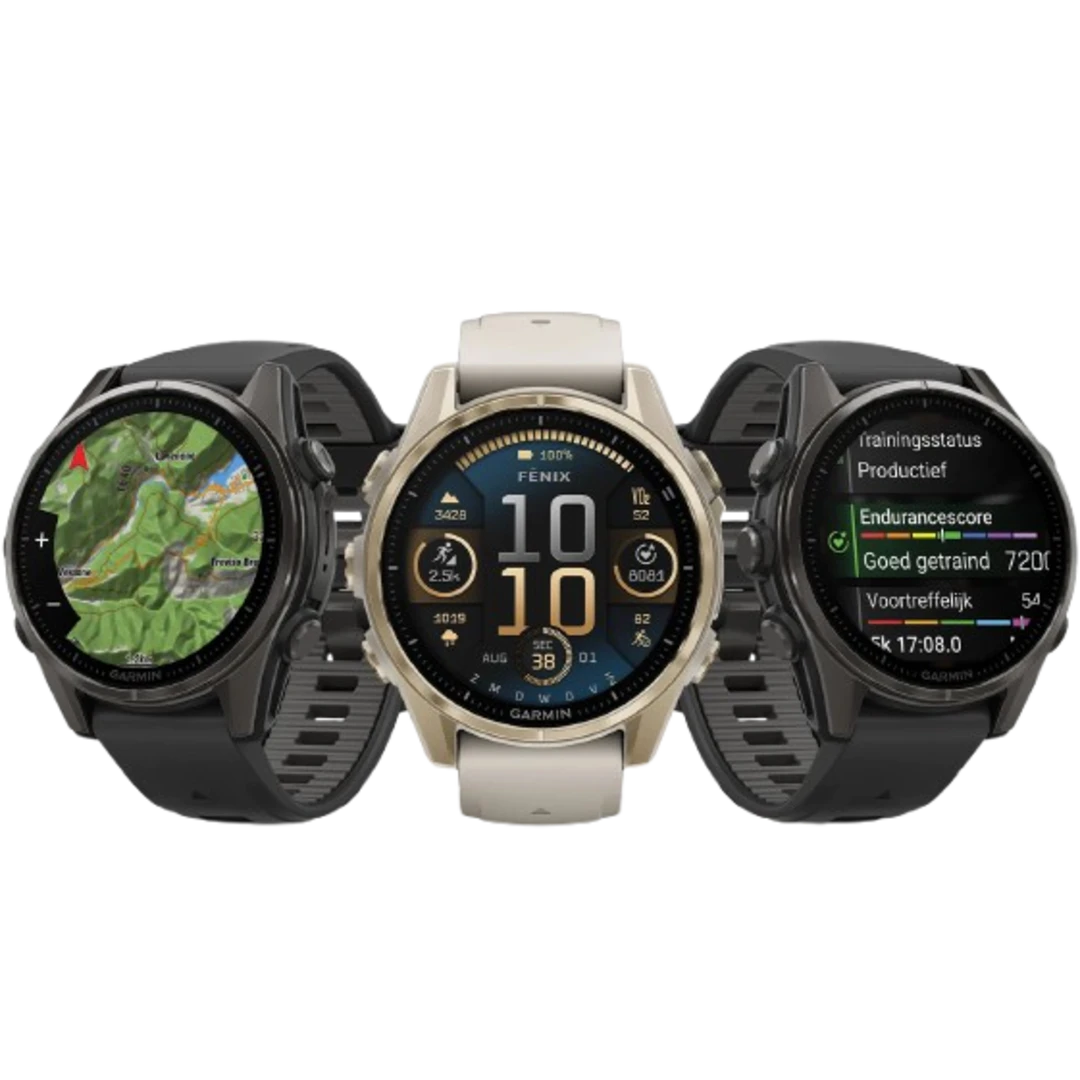
Thinking of buying a Garmin fēnix? Compare all models and prices
Looking for a Garmin fēnix? This is Garmin’s premium multisport range: watches with built-in topographic maps and, in the Sapphire models, a titanium bezel and sapphire crystal. Built for mountain hikes, long training sessions and days without access to a power socket. You do pay a premium for them, though, and the larger cases are quite substantial. We’ve compared all fēnix models with the current prices from all retailers, 100% independently. Use the filters for case size, screen type and battery life to instantly find the model that suits your wrist and your budget.
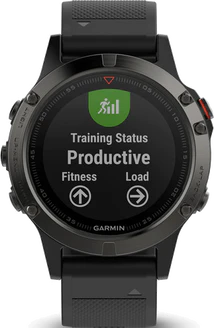
What should you look out for when choosing a Garmin fēnix?
The fēnix is Garmin’s flagship model: it packs everything the brand has to offer. It features built-in maps, a battery life measured in weeks rather than days, and a rugged casing. Your choice mainly comes down to three things: which model (fēnix 8 or fēnix 8 Pro), which screen type and which case size. The latter is more important than people realise, as the largest models are really big.
fēnix 8 or fēnix 8 Pro?
The fēnix 8 Pro mainly adds communication features. As well as all the standard features, the Pro has built-in LTE, allowing you to make calls, send messages and send an emergency signal without a phone; you do, however, need to pay for a subscription. On top of that, the Pro sends two-way satellite messages via Garmin’s partner Skylo, which is handy when there’s absolutely no network coverage at all. There’s also a version with a 4,500-nit MicroLED screen – extremely bright – but that’s also the most expensive watch in the range and has the shortest battery life on a single charge.
If you don’t need those communication features, the standard fēnix 8 is the more sensible choice. What’s more, it is available in a 43mm size; there’s no 43mm version of the Pro, as the LTE antenna doesn’t fit inside that case.
Battery life: weeks rather than days
According to Garmin, the 47mm fēnix 8 Pro with an AMOLED screen lasts up to 15 days in watch mode and 44 hours with GPS enabled; the 51mm version lasts up to 27 days and 78 hours. If you keep the screen on permanently, the battery life is roughly halved. By way of comparison: an Apple Watch or Galaxy Watch typically lasts one to two days. If you want to go even longer, opt for a Solar model with an energy-efficient transflective screen that recharges in the sun.
Maps and navigation without a phone
Topographic maps are stored on the watch itself, so you can navigate even without mobile coverage and without a phone in your pocket. With multi-band GPS, your track remains reliable between tall buildings and under dense foliage, where cheaper watches tend to lose their signal. You won’t notice much difference on a quick trip around town; on a multi-day trek, however, it’s the difference between knowing where you are and not.
The downside: price and size
The fēnix is the most expensive model Garmin makes, and the Pro models are a fair bit more expensive still. You’ll also need to factor in size: the Pro is only available in 47mm and 51mm, and on a slender wrist, that’s simply too big a watch. If you wear it to bed to track your recovery, that factor counts double. If you find it’s ‘too big’ or ‘too expensive’, then the Instinct (robust, cheaper) and the Venu (smaller, AMOLED, health-focused) are the logical alternatives.
Choose the fēnix 8 Pro if you regularly find yourself out of mobile range and want to stay reachable without a phone.
Choose the fēnix 8 if you want the maps, the build quality and the battery life, but don’t want a mobile contract or a case measuring 47mm or larger.
