
Compare Garmin Forerunner models
Are you looking for a Garmin Forerunner? This is Garmin’s running range: sports watches that focus on pace, heart rate, training load and recovery, in a lightweight case that you’ll barely notice during a long endurance run. The range extends from a simple entry-level model to a running watch for triathletes with built-in maps. We compare the current prices across all retailers, 100% independently. Use the filters for size, battery life and price, or take a look at the full range of Garmin smartwatches first.


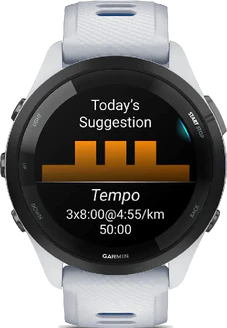
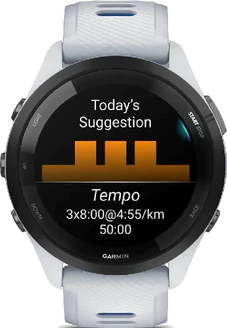
What should you look out for when choosing a Garmin Forerunner?
Choose your Forerunner based on how seriously you train, not on the highest model number. The range is all about running and is designed with that in mind: it’s lightweight, with buttons that work even when your fingers are wet or cold. All current models feature an AMOLED screen; you can see which ones are currently available and how much they cost in the overview above.
From entry-level to triathlon watches
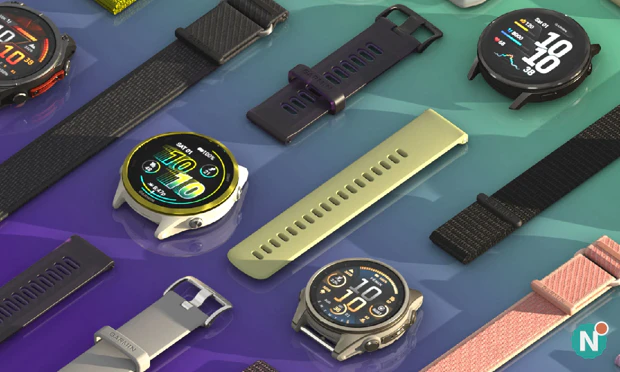
The number tells you what you’re getting: the higher the number, the more accurate the GPS, the more measurement data and the more comprehensive the navigation.
- Forerunner 70 and 170: the entry-level models. Pace, distance, heart rate and the basics of Garmin’s training analysis. The 170 adds an altimeter, Garmin Pay and open-water swimming profiles.
- Forerunner 265: the mid-range model and, for many runners, the turning point. Dual-band GPS ensures reliable distance tracking between high-rise buildings and under trees, and it includes triathlon profiles.
- Forerunner 570: the same basics, but with Garmin’s latest heart rate sensor (Elevate 5), comprehensive triathlon guidance and an aluminium bezel.
- Forerunner 970: the top-of-the-range model, with full topographical maps on your wrist, automatic transition modes for triathlons and a titanium bezel with sapphire crystal.
| Model | Positioning | Case and bezel | Price range* |
|---|---|---|---|
| Forerunner 70 | entry-level | plastic | € |
| Forerunner 170 | advanced entry-level model | plastic | €€ |
| Forerunner 265 | mid-range model | plastic | €€ |
| Forerunner 570 | triathlon all-rounder | plastic with aluminium bezel | €€€ |
| Forerunner 970 | top-of-the-range model with maps | plastic with titanium bezel and sapphire crystal | €€€€ |
*Relative price indication within the range: more € symbols mean a higher price. See the overview above for current prices.
How it benefits you as a runner
The added value lies not in the measurement itself, but in what happens with the data afterwards. A Forerunner tracks your training load over weeks, estimates your recovery and warns you if you’re pushing yourself too hard. For a race, you can use a pacing plan to spread your pace across the course in advance. So you train with a goal in mind, rather than looking back afterwards to see how fast you ran.
Weight matters too: a Forerunner weighs significantly less than a steel smartwatch, and you really notice the difference after an hour and a half of running.

The honest downside
A Forerunner remains a sports watch. The case is made of lightweight plastic, and only the more expensive models have a metal bezel (aluminium on the 570, titanium on the 970); the focus is on tracking, not on looking good. If you’re mainly after a watch that looks good all day and that you can also wear with a shirt in the evening, then the Garmin Venu might be a better choice: it’s designed as a lifestyle watch with sports features, whereas the Forerunner is a sports tool that you can also keep on for the rest of the day.
Garmin, Apple or Samsung?
Garmin wins on battery life and sports data, but loses out on smart features. A Forerunner lasts for days rather than just a day, provides more comprehensive tracking during exercise and works with both iPhones and Android phones. On the other hand, the range of apps is limited, and features such as phone calls, a voice assistant and a dedicated mobile connection are largely absent.
Choose a Forerunner if you train with a goal in mind: running data, training guidance and a battery that doesn’t need plugging in every night.
Choose a Apple Watch or Samsung Galaxy Watch if apps, making calls from your wrist and notifications are more important to you than your training schedule.
The other Garmin series
If a running watch isn’t quite what you’re looking for, one of the sister series might be a better fit.
- Venu: Garmin’s lifestyle watch, with an emphasis on design and a stunning display.
- vívoactive: the affordable all-rounder and the cheapest way to get started with Garmin.
- Instinct: the rugged outdoor range with an extremely long battery life and models featuring solar charging.
- fenix: the top-of-the-range multisport model with a metal case and all the features you could want.
Still unsure which series to choose? In the overview of all Garmin smartwatches, you can compare them side by side, with the current prices from all retailers.
